Celtic designs in sterling silver
Silver celtic jewellery from the UK is 925 sterling silver: an alloy of 92.5 percent pure silver and 7.5 percent copper, stamped "925" on the hallmarked or cast pieces that circulate across Britain. A shopper in Edinburgh, Leeds or London can order a 925 silver claddagh ring, a Celtic knot pendant or a set of celtic silver rings straight from a UK workshop, with 2 to 3 working days of tracked delivery to most postcodes. The alloy's strength is the point: pure 999 fine silver is so soft it bends under the weight of a chain, so the 7.5 percent copper brings a piece through soldering and wear while the silver content keeps the 925 sterling silver jewellery explained end to end story simple, a metal you can verify by stamp, by magnet and by price.
What counts as a Celtic design
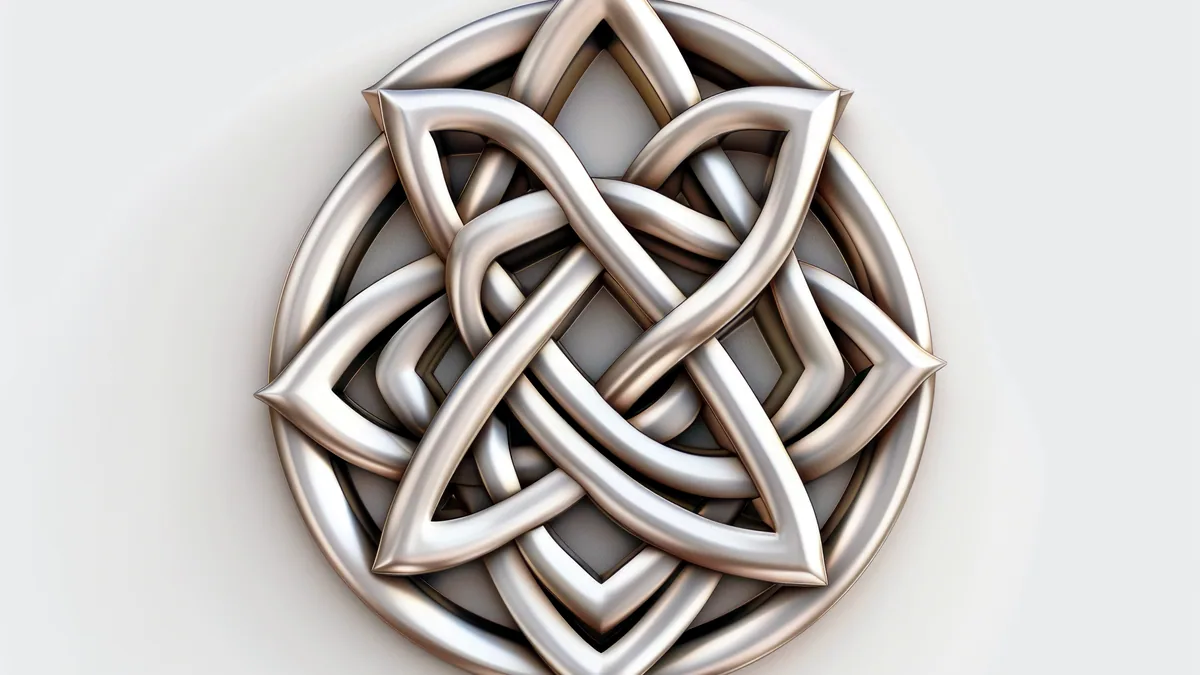
Celtic design in jewellery means ornament drawn from the manuscript and metalwork traditions of Ireland, Scotland and Wales, and the motifs repeat across every 925 sterling silver piece that carries the style. The core set is small: the triskele of 3 spirals, the trinity knot with no start and no end, the interlaced knotwork taken from the Book of Kells, and the claddagh, the Irish ring that carries a crowned or plain heart between 2 hands. Each carries a fixed meaning, so the design is not decoration alone but a coded message: the claddagh heart is loyalty, the hands are friendship, and the crown marks love, a set of 3 symbols read in one 20 mm ring.
- Trinity knot: 3 interlaced lobes standing for an unbroken bond
- Triskele: 3 spirals in motion, a symbol of renewal and of the past, present and future
- Knotwork: interlaced lines with no beginning and no end, read as eternity
- Claddagh: heart, hands and crown for love, friendship and loyalty
Because the vocabulary is compact, a jeweller can work the whole set into a single 925 sterling silver ring, and the motifs stay legible at a 15 mm pendant or a 5 mm stud. The next question is why the metal itself suits that work.
Why sterling silver is a good metal for jewellery
Sterling silver serves 925 sterling silver jewellery because it combines 3 properties at once: softness to work, strength to wear and a warm colour that flatters skin. Fine silver, the 999 grade, is a 2.5 on the Mohs hardness scale, which is why it suits ingots and investment bullion but not a ring that knocks against a keyboard. Alloying in the 7.5 percent copper lifts working hardness enough for soldering and setting, and the finished 925 grade still polishes back to a bright mirror in under 1 minute with a polishing cloth. Silver is also 1 of the few precious metals that stays comfortable against the skin for a full working day, which is why a 925 silver ring is the standard choice for a piece worn every day.
| Metal | Silver content | Typical hardness | Common use |
|---|---|---|---|
| 999 fine silver | 99.9 percent | 2.5 on the Mohs scale | Bullion, coins, antique work |
| 925 sterling silver | 92.5 percent | Around 3.5 on the Mohs scale | Rings, chains, pendants, everyday jewellery |
| Argentium silver | 92.5 percent | Slightly higher working hardness | Modern pieces made to resist tarnish |
The copper content does bring one maintenance task: sterling silver tarnishes as the copper reacts with sulphur in the air, a film that a polishing cloth or a 20 second dip in a silver dip removes. The table above shows why the 925 grade, and not the softer fine grade, is the metal that carries Celtic knotwork through daily wear.
The 925 sterling silver range you can buy in the UK
The 925 sterling silver range from UK makers splits into 4 families, and the price of each family is set by the gram weight of the piece, not by the motif. A ring runs 3 to 6 grams, a pendant 2 to 8 grams, and a pair of stud earrings under 1.5 grams in total, so a small knot pendant at 3 grams is priced from a few pounds, while a 6 gram ring sits higher on the scale. Delivery across the UK is the other half of the offer: 2 to 3 working days by tracked post to most postcodes, with 1 day next morning available at a small extra charge for orders placed before 2 pm. Every piece is stamped "925" at the clasp or the shank, and a portion of the range carries the London Assay Office hallmark, the lion, the date letter and the "925" numeral, which is the verification a UK buyer uses before paying.
- Rings: claddagh and knotwork bands in 3 to 6 grams, sized to UK sizes 40 to 64
- Pendants: trinity knot and triskele pieces in 2 to 8 grams on a 45 cm or 50 cm chain
- Earrings: 5 mm Celtic studs and 25 mm drops, each pair under 1.5 grams
- Hallmarked pieces: London Assay Office lion and date letter in addition to the 925 stamp
The price per gram is the number to compare when you shop across 2 UK sellers, and the hallmark is the number that tells you the 925 grade is genuine rather than claimed.
Irish silver and the Celtic tradition
Irish silver is the heart of the Celtic tradition, and the 925 grade ties modern Irish work directly to the old craft. The claddagh comes from the fishing village of Claddagh in Galway, a ring made around 1750 that has carried the heart, hand and crown symbols for 275 years. The Irish hallmarks that appear on older pieces, the harp, the crown and the date letter, are the ancestors of the marks a 925 sterling silver pendant carries today, and the Book of Kells, copied around 800 AD, is the manuscript source for much of the knotwork you see on a modern ring. When you buy Irish silver Celtic jewellery in the UK, you are buying from that same unbroken line: a Galway claddagh maker, a Dublin workshop or a UK jeweller drawing on the Kells patterns, each finishing the piece in the 92.5 percent alloy that has carried the style from the medieval period to the present day.
Antique and vintage 925 silver
Antique 925 silver is pre-owned sterling from the 19th and early 20th centuries, and its value sits in the age of the piece, the maker's mark and the condition of the metal. A Georgian or Victorian brooch, a 1912 signet or an Edwardian chain will carry the maker's mark, the assay office mark, the date letter and the 925 standard mark, a set of 4 marks that a hallmarks reference lets you read to the year. Condition moves the price as much as age does: a 925 silver antique ring that has lost weight to wear, or a chain with 2 broken links, is priced well below an unbroken piece, and a clean, complete chain from 1905 is priced above a newer 925 piece of the same weight. If you are buying 925 silver antique jewellery in the UK, weigh the piece in grams, check the 4 hallmarks against a date-letter chart, and compare the per-gram price to new 925 stock, because the antique premium should be earned by the date and the maker, not by the weight alone.
Choosing and caring for a Celtic silver piece
Choosing a Celtic silver piece comes down to 3 checks, and caring for it is a task measured in minutes rather than hours. First, match the motif to the meaning you want: the claddagh for love and loyalty, the trinity knot for an unbroken bond, the triskele for renewal. Second, check the size and the weight, a 52 UK ring size for a man's band, a 50 cm chain for a pendant worn at the collarbone, and the gram weight that sets the price. Third, confirm the 925 stamp or the full hallmark before you pay, since the mark is the guarantee that the 92.5 percent content is real. For care, a soft cloth removes daily tarnish in under 1 minute, a silver dip handles heavier film in 20 seconds, and a sealed pouch keeps a piece that is not worn daily free of the sulphur that starts the tarnish. Worn or stored, a 925 sterling silver Celtic piece keeps its meaning and its metal for 100 years or more, which is the measure by which the whole 925 standard was set.
Where to start
Other sections
Inherited addresses in this section
/celtic-jewellery-651Celtic designs in sterling silver