925 sterling silver earrings
Sterling silver earrings in the UK are earrings made from an alloy of 92.5% pure silver and 7.5% copper, stamped with the "925" hallmark or the British lion's head mark, and sold by 40+ independent and high-street retailers across the country. The 925 standard, set by the UK Assay Office in London and enforced under the Hallmarking Act 1973, means the metal has passed a fire assay or XRF test and carries a government-backed guarantee of purity. This page covers what that hallmark actually means, the 3 main styles (studs, hoops and drops), typical price bands you will see on UK sale shelves, and how to spot a genuine piece before you buy. SilverStandard is a new, unaffiliated project; it is not connected to the former Shop4Silver brand or its owners.
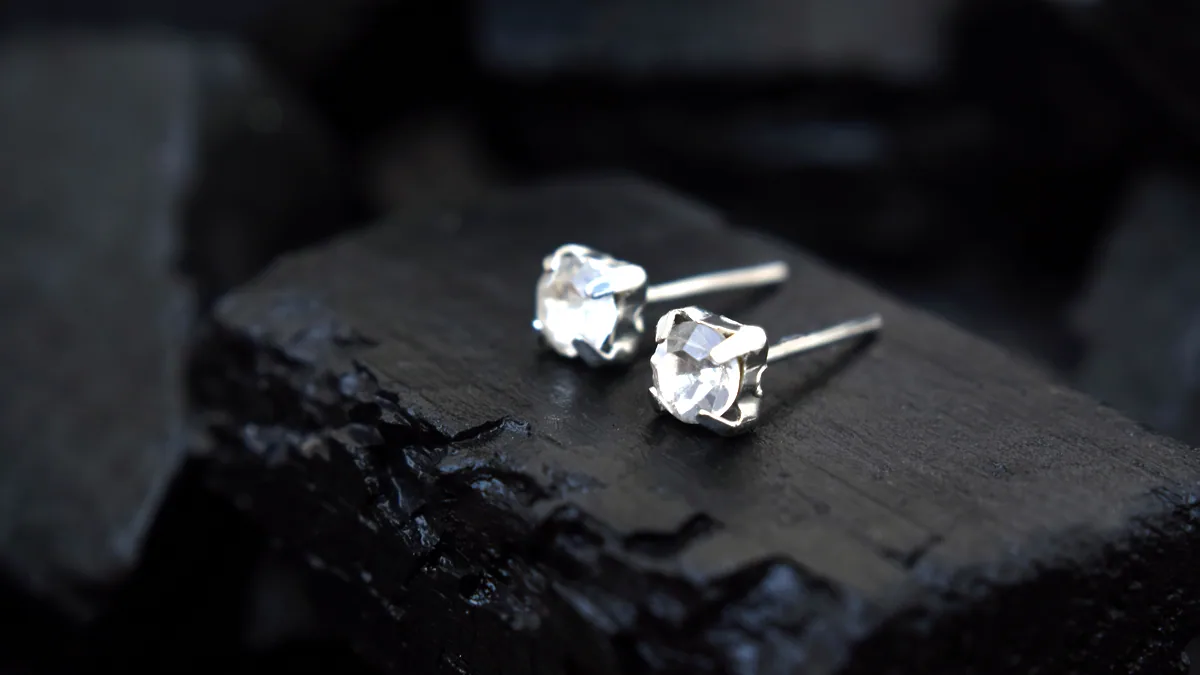
Design range is wide: from plain 2 mm post studs to sculptural Celtic knot and triskelion earrings, and the same 925 standard runs through every finish, from mirror-polished to oxidised matte. If you are also browsing other 925 pieces, the same alloy standard and hallmark apply to 925 sterling silver rings, bracelets and necklaces, so the buying rules below transfer directly.
What the 925 hallmark means
The "925" mark on a sterling silver earring tells you the piece contains exactly 925 parts of pure silver per 1,000 by weight, with the remaining 75 parts being copper or a small blend of copper, zinc and nickel. In the UK, a piece over 7.78 g of silver must be hallmarked by one of the 4 national Assay Offices (London, Birmingham, Sheffield and Edinburgh) before it can be sold as sterling. The hallmark includes the silver mark (925 or the lion's head), the maker's mark, the assay office mark and a date letter. For earrings, the post or the back of a hoop usually carries the stamp, so hold the piece to light and look for a small but legible 925 imprint. A genuine hallmark is stamped, not printed or etched, and the impression should be crisp to the touch.
Why 92.5% and not 100% silver
Pure silver is too soft to hold the thin, spring-loaded posts or the curved wire of a hoop without bending. The 7.5% copper addition raises the alloy's hardness to about 2.5 on the Mohs scale, which is enough to resist daily flexing around the ear. That is why every credible UK maker, from a one-person studio in Penzance to a 200-year-old house in London, works in the same 925 composition: the standard is not a cost-saving shortcut, it is a structural requirement.
Sterling silver earring styles in the UK
UK shoppers most often search for 3 shapes, and the 925 hallmark is identical across all of them. Studs, hoops and drops account for the large majority of what high-street and online UK sellers list as sterling silver earrings, and each style has its own fitting and weight considerations.
- Studs: a single 925 post, 0.8 mm to 1 mm in diameter, with a butterfly or screw back. Typical weight is 1.5 g to 4 g per earring, light enough to sleep in. Common designs include plain spheres, small hearts and the Celtic knot motif.
- Hoops: a continuous 925 circle, 12 mm to 35 mm in diameter, held by a click-lock or hinge clasp. A 20 mm hoop weighs roughly 3 g to 6 g; larger 35 mm hoops can reach 8 g to 12 g per earring, which starts to pull on a stretched earlobe.
- Drops: a 925 top stud connected to a hanging element such as a teardrop, a bar or a small chain. Drop earrings range from 4 g to 15 g per side, and the longer the drop, the more important the clasp security becomes.
Wholesale buyers ordering from UK fabricators typically see the same 3 categories split into 8 to 12 SKUs per collection, so the style vocabulary you see in a shop window is the same one a maker's catalogue uses.
Price of sterling silver earrings in the UK
Price is the first filter most UK buyers apply, and the range is wider than the "cheap silver earrings" tag in a search bar suggests. A pair of 925 studs from a mid-range UK retailer costs 15 pounds to 45 pounds; a pair of 20 mm hoops from the same shelf runs 25 pounds to 60 pounds; and a pair of sculpted drop earrings with a design detail (a knot, a filigree panel, a small gem) sits at 40 pounds to 120 pounds. Sale periods, usually January and July, can bring those bands down by 20% to 30%.
| Style | Typical UK price (pair) | Typical weight per earring |
|---|---|---|
| Studs (plain or small motif) | 15 to 45 pounds | 1.5 to 4 g |
| Hoops (12 mm to 35 mm) | 25 to 60 pounds | 3 to 12 g |
| Drops / dangles | 40 to 120 pounds | 4 to 15 g |
Anything stamped 925 and priced below 10 pounds for a pair is worth a second look: the metal alone, at the current silver rate of roughly 0.55 pounds per gram, should account for 1 pound to 6 pounds of the price depending on weight, and a legitimate maker still needs to cover labour, hallmarking and margin. A "cheap" 925 earring at 8 pounds is not impossible for a 1 g stud, but it is not possible for a 10 g hoop, and that is where fakes tend to hide.
Womens silver stud and hoop earrings: what to check before you buy
Before you pay for a pair of womens silver stud earrings or hoops in the UK, 4 checks separate a genuine 925 piece from a plated or mixed-alloy lookalike. Do the checks in this order, because each one narrows the field for the next.
- Look for the 925 stamp or lion's head mark on the post or clasp. A hallmark should be raised or debossed, not painted. If the stamp is on both earrings, the odds of a fake drop sharply.
- Weigh the pair on a kitchen scale calibrated to 0.1 g. A genuine 925 stud pair weighs 3 g to 8 g combined; a plated pair of the same size often weighs 1.5 g to 3 g because the core is brass or copper.
- Test the post colour. Freshly cut 925 silver is a soft white with a faint warm grey undertone. Plated posts show a brighter, slightly yellowish edge where the plating has thinned.
- Check the clasp mechanism. A well-made 925 hoop uses a click-lock or a hinge with a 4 mm pin; a cheap plated hoop often uses a simple snap that flexes and opens after a few weeks of wear.
These 4 steps take under 2 minutes and eliminate the vast majority of mislabelled pieces you will encounter on UK marketplaces and social-media shops.
Where to buy sterling silver earrings in the UK
UK buyers can purchase 925 sterling silver earrings through 3 main channels, each with a different price-to-assurance trade-off. Independent UK jewellers and online stores (the kind of specialist this site covers) sell hallmarked pieces at 15 pounds to 120 pounds per pair and include the hallmark certificate as a matter of course. High-street chains and department stores carry a mix of 925 and plated stock at similar shelf prices, so you must apply the 4 checks above before leaving the counter. Online marketplaces such as eBay list everything from a 12 pound genuine stud to a 3 pound unmarked hoop, and the buyer bears the risk of verification. For wholesale, UK-based 925 fabricators in the Midlands and the Scottish Borders supply retailers and boutique makers with unhallmarked blanks at 0.50 pounds to 1.20 pounds per gram, and the hallmark is added only when the finished piece enters the retail channel.
International buyers sometimes search for sterling silver earrings in Australia or New Zealand, and the 925 standard is identical; the hallmarking system differs (Australia uses its own ASSAY OFFICE mark), so a piece hallmarked in London will still read 925 and be recognised in Sydney or Wellington without issue.
Care, storage and resale value
A 925 sterling silver earring keeps its value and its finish if you follow 3 simple habits. Wipe each earring with a soft, lint-free cloth after wearing, because skin oils and the trace sulphur in the air form a thin tarnish layer within 4 to 6 weeks that dulls the 925 surface. Store the pair in a small sealed bag or a felt-lined box away from humidity; a 925 earring left in an open jewellery tray in a bathroom will tarnish in 2 weeks rather than 6. Avoid contact with perfume, hairspray and chlorine, which accelerate tarnish and can pit the copper content in the alloy over several years of repeated exposure. When it is time to sell or trade in, the 925 hallmark is what a UK buyer or a silversmith will verify first; a piece with a clear, complete hallmark from one of the 4 Assay Offices retains roughly 70% to 85% of its retail price in the resale market, which is a useful benchmark when you are deciding whether to keep a pair or part with it.
Where to start
Other sections
Inherited addresses in this section
/earrings-641925 sterling silver earrings