925 silver jump rings
Sterling silver jump rings are small, open-ended C-shaped loops of 925 sterling silver that link charms, beads and pendants onto chains, and they also hold a clasp or a ring in place on a finished piece. The 925 mark means the wire is 92.5% pure silver with 7.5% alloy, and the open gap lets you thread one end through another loop and then bend the gap shut. On the shop's bench the working set is a 6 pack of 30 gauge rings in 3 sizes: 4 mm, 5 mm and 6 mm, each with a 0.2 mm gap, which covers most charms, jumpers and repair jobs. Because the gap opens and closes, a single ring can join, rejoin and re-route a design without a soldering lamp.
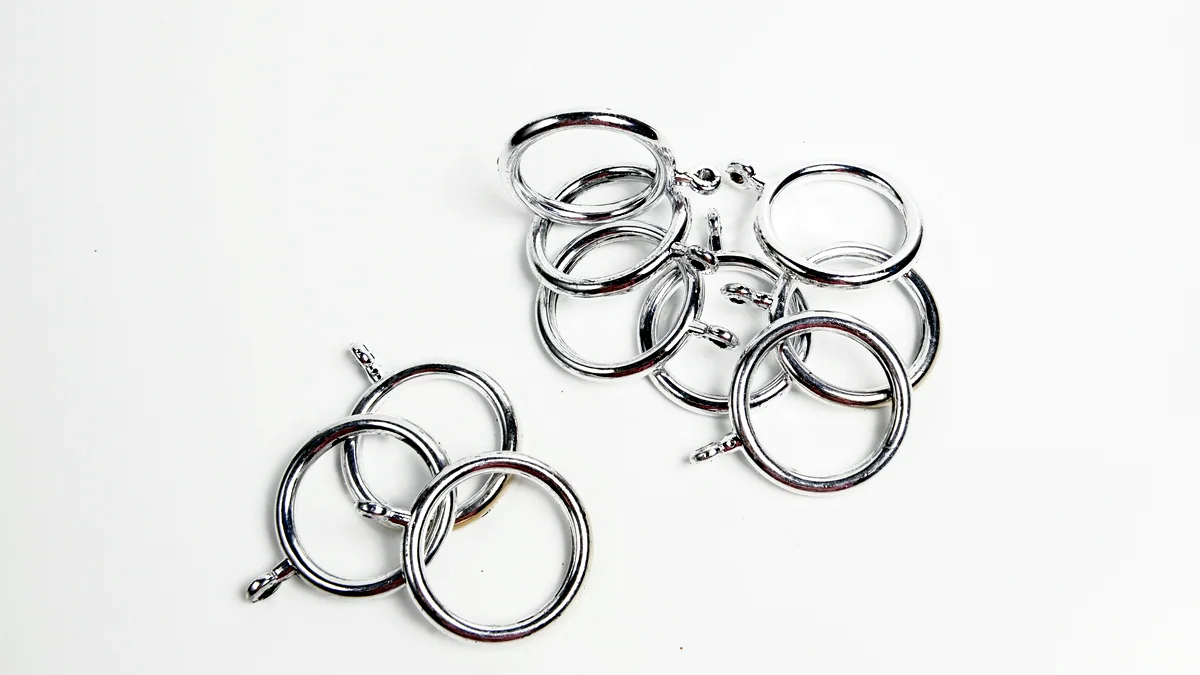
A jump ring is the connective tissue of a piece: a 2.5 mm ring closes a clasp, a 4 mm ring carries a dangle, and a 6 mm ring bridges two strands. That is why a 100 pack of 925 sterling silver rings is a sensible first buy for a maker, and why the same rings appear across the rest of the line, from Men's 925 silver rings to 925 silver engagement rings and on to Silver Toe Rings in 925 Sterling Silver. The ring itself is a commodity, and the choice of gauge and diameter is the only thing that changes the job it does.
What makes a jump ring sterling
A sterling jump ring is stamped or sold as 925 silver, the same alloy the finished jewellery uses, so the metal matches the chain, the findings and the setting it is fastening. The 7.5% alloy, usually copper, adds the hardness the pure silver core alone would not hold over years of opening and closing. A sterling ring therefore holds a joint without the colour mismatch that a plated or a silver-tone ring would show. If you are joining a 925 chain, a sterling ring is the only join that keeps the whole piece in one metal.
Gauge, diameter and the gap
Three numbers define the ring you buy, and each one has its own job. Gauge is the thickness of the wire, diameter is the inner circle the ring makes, and gap is the width of the open end. The table below is the range stocked, and it is the range that covers most charm, clasp and repair work.
| Gauge (AWG) | Wire thickness (mm) | Typical inner diameter (mm) | Typical use |
|---|---|---|---|
| 30 | 0.32 | 2.5 to 4 | Clasps, fine charms |
| 26 | 0.41 | 4 to 6 | Dangles, chain links |
| 22 | 0.64 | 6 to 8 | Heavy links, repair |
A 30 gauge ring closes a delicate clasp, a 26 gauge ring carries a dangle, and a 22 gauge ring takes the load of a full bracelet. The gap is smaller, about 0.2 mm to 0.5 mm, and it is sized so that two flat-nose pliers can pinch the two sides apart and back together without kinking the wire. That is the part that makes a ring openable and closable, which is why the opening and closing technique is the skill to learn next.
Buying bulk for making
Bulk is how a maker keeps the cost of a ring below a single penny, and it is how a repair kit stays stocked through a season of work. The line runs in a 10 pack, a 50 pack and a 100 pack of 925 sterling silver rings, and the price per ring drops as the pack size grows. A 100 pack of 30 gauge rings is the workhorse for a studio, because a single pendant setting, a strand of charms and a batch of clasps will eat through a 10 pack in an afternoon. Buy bulk in the two gauges and three diameters you actually use, and keep a 10 pack of an odd size for one-off jobs, rather than a single 100 pack of a size you rarely reach for.
How to open and close a ring
To open and close a ring cleanly, work the gap sideways with two flat-nose pliers instead of pulling the two ends apart with one. To open the ring, hold one side of the gap in each plier and twist the pliers away from each other until the gap widens to about 1 mm. To close it, twist the pliers back together until the two ends meet and sit flush. Pulling with a single pair of pliers, the way a lot of beginners do, bends the ring into an oval and leaves the gap with a kink that catches on thread. The sideways twist keeps the circle round and the metal in line, so the ring closes flat and the joint stays strong. For a 30 gauge ring the motion is small and quick; for a 22 gauge ring it is slower and needs a second finger of pressure, because the thicker wire resists the twist.
Choosing the right ring for the job
Choose the ring by the load it must carry and the look the finished joint should show. A clasp wants a 30 gauge ring in 2.5 mm to 3 mm, small enough to hide in the clasp body and strong enough to hold the chain. A dangle or a charm wants a 26 gauge ring in 4 mm, round enough to swing and thick enough to keep its shape. A heavy link or a repair across a broken chain wants a 22 gauge ring in 6 mm or 8 mm, because the thickness, not the diameter, is what carries the weight. If two charms are the same size but one is solid and one is a hollow shell, the solid one needs the heavier ring, even when the outer diameter is identical, because the solid one pulls on the gap with more force on every move of the wrist.
Care and storage for sterling rings
Care for sterling rings by keeping them dry and out of direct contact with skin, because the 7.5% copper in the alloy tarnishes when it meets sweat and air. A 100 pack that has sat in an open drawer will show a grey bloom across the gaps within a few weeks, and a tarnished ring closes with a dull, grey joint against a bright chain. Store the rings in a sealed bag with a silica pack, or in a small box by gauge and size, and wipe a ring with a 925 polishing cloth before you close it onto a piece. For a ring that is part of a finished piece, a light polish every 3 months keeps the join bright and stops the tarnish from building in the gap where the two ends meet. The ring is the small part you will replace most often, and keeping a sealed bulk pack clean is what keeps every finished joint looking new.