Clean sterling silver rings at home
Sterling silver rings are cleaned at home with 4 core methods ranked from fastest to deepest: a wipe with a polishing cloth that takes 30 seconds, a 1 to 2 minute warm soapy wash, a 5 minute dip for 925 sterling silver rings, and an overnight dip for heavy tarnish. All 4 methods use items that most kitchens already hold, and none damages the metal if the gemstones in the ring are safe for liquids, which is true for cubic zirconia but not for pearl, opal, emerald or turquoise. The routine below runs from the quick wipe to the overnight dip, with the silver care storage rules that keep the shine in place after cleaning.
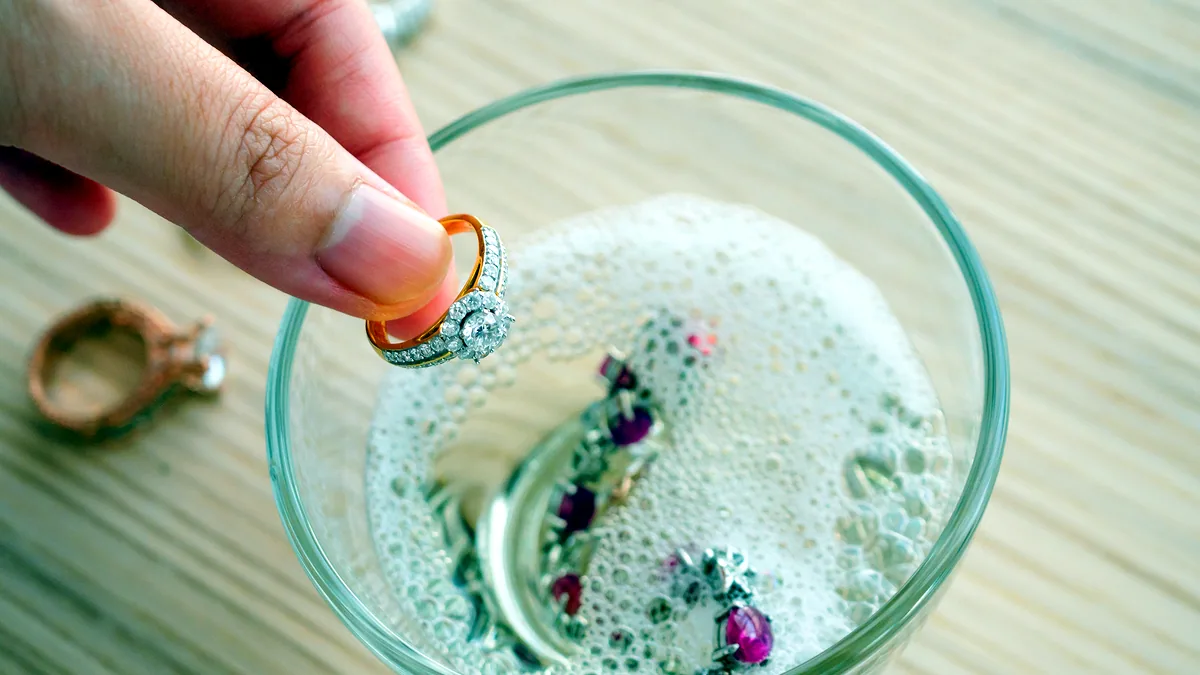
Before you start, confirm the stone is liquid-safe and match the method to how far the tarnish has gone. A thin grey film answers to a cloth, a darker patch answers to soapy water, and a deep grey or black film answers to a dip. Silver jewellery care and storage then becomes the second half of the job, since a 925 sterling silver ring left in an open drawer tarnishes again within weeks.
What you use to clean a sterling silver ring
To clean a sterling silver ring at home, you use one of 3 things depending on the job: a silver polishing cloth for light tarnish, dish soap for everyday grime, and a baking soda or salt dip for heavy tarnish. The metal itself is the deciding factor. A ring stamped 925, .925 or sterling is 92.5% silver and 7.5% alloy, and that alloy is exactly what tarnishes. Sterling silver rings are 92.5% silver by definition, so a ring stamped 925 is the kind of metal every home method below is built for. If the ring is silver plate instead, skip the dips and stick to the cloth and the soapy wash, because a plated layer is only a few microns thick and a strong dip can strip it.
| Method | What it is for | Time |
|---|---|---|
| Polishing cloth | Light grey film | 30 seconds |
| Warm soapy wash | Everyday grime and film | 1 to 2 minutes |
| Baking soda dip | Moderate to heavy tarnish | 5 minutes |
| Overnight dip | Deep grey or black film | 8 to 12 hours |
Every method on that table ends with a rinse in cold water and a dry with a lint-free cloth, so keep a towel or a microfibre cloth close before you start. If the ring holds a gemstone, check the stone type next, because the liquid steps in this article assume cubic zirconia, which is safe, and a softer stone, which is not.
Step by step, how to clean sterling silver rings with cubic zirconia
To clean sterling silver rings with cubic zirconia, follow these steps in order, and stop at the first step that restores the shine. A cubic zirconia stone is rated 8 on the Mohs hardness scale, sits below diamond at 10 and above sapphire and ruby at 9, and passes the water test without issue, which is why the soapy wash and both dips below are safe for it.
- Wipe the band and the setting with a dry polishing cloth, and let the cloth do the work over the next 30 seconds.
- Fill a small bowl with 200 ml of warm water at roughly 40 C, add 2 drops of mild dish soap, and swish a 925 sterling silver ring in it for 30 seconds with a soft baby toothbrush.
- Rinse in cold water, then dry the band and the setting with a lint-free cloth.
- For heavier tarnish, line a disposable bowl with aluminium foil, shine up, add 1 level teaspoon of baking soda, pour in 200 ml of boiling water, lower the ring so it touches the foil, and leave it for 5 minutes.
- Lift the ring out, rinse, dry, and inspect. If tarnish remains, repeat the dip or move to the overnight soak described below.
The toothbrush is used for the soapy wash and the rinse only, never on the polishing cloth. After 5 minutes in the dip, most rings come out bright, and the 8 to 12 hour overnight soak is reserved for the rings that still look grey after a second 5 minute dip.
What to clean sterling silver rings with when the dip fails
To clean a sterling silver ring when the 5 minute dip fails, reach for a commercial silver dip or a silver cleaning cream, and apply it with the rules below. A commercial dip works on the same principle as the foil dip, only faster, and the cream works by polishing the tarnish off with a fine abrasive. Use a cream on a band with no prongs, apply it with a cotton bud in small circular motions, and rinse within 60 seconds. Keep both products away from gold and white gold pieces, and skip both on pearls and on soft stones such as opal and turquoise, because the chemistry is tuned for silver and too strong for those materials. If the ring is antique or has an old stone setting, stop at the cloth and the soapy wash, or hand the ring to a jeweller for an ultrasonic or steam clean, since home abrasives on an old setting can loosen a stone that a jeweller would simply re-tighten.
How often to clean sterling silver rings in the UK
To keep sterling silver rings bright in the UK, wipe with a cloth once a week and give them a soapy wash once a month, with a dip only when the film is visible. UK homes sit around 40% to 60% relative humidity through the winter, and silver tarnishes faster in damp air than in dry, so a ring worn most days of the week needs its monthly wash on schedule rather than on demand. The skin oils from daily wear help slow tarnish on the worn band, which is why a ring kept in a drawer goes grey before a ring that lives on a finger. Rinse a ring under cold tap water after any swim in chlorinated pool water, because chlorine accelerates the tarnish that the monthly wash exists to remove. A ring that is worn regularly and wiped weekly stays bright with less cleaning than the same ring left in an open box, which brings the routine full circle back to storage.
Sterling silver jewellery care and storage to keep rings clean
Sterling silver rings stay clean longest when they are stored dry, apart from each other, and away from the air that tarnishes them. Tarnish is silver sulfide forming on the surface, and it forms faster with moisture and with the sulfur in the air, so the storage rules below cut down on both. Store each ring in its own soft pouch or a lined box with a silica gel packet, keep the box in a cool dry drawer rather than a bathroom, and hang or box pieces away from rubber, wool and certain plastics, which off-gas sulfur. Wipe a ring down after a shower or a swim, because salt water and chlorine speed the same tarnish. A sealed plastic bag with an anti-tarnish strip is the best option for rings that are not worn, and it holds a ring's shine for 12 months or more, while an open drawer gives up that shine in weeks. These same rules cover the wider set of silver jewellery care and storage, from bracelets to necklaces, since the metal behaves the same in every form.
Quick answers on sterling silver rings cleaning
Sterling silver rings cleaning at home raises 5 recurring questions, and each has a direct answer. Yes, a baking soda dip is safe on 925 sterling silver, and it is safe on a cubic zirconia stone. No, do not use a baking soda dip on a ring with pearl, opal, emerald or turquoise, because the reaction is too aggressive for those stones. Yes, you can clean silver jewellery in the UK with the same home routine used anywhere, since the chemistry of tarnish does not change with the address. No, do not use a polishing cloth on silver plate, and use it only on solid sterling silver rings. And yes, a ring with a cubic zirconia stone goes through the exact same steps as a plain band, because the stone passes the water test and the dip test alike. When in doubt about an unset or unusual stone, the cloth and the soapy wash cover the safest ground, and they keep the ring clean without touching the stone at all.