Silver locket necklaces
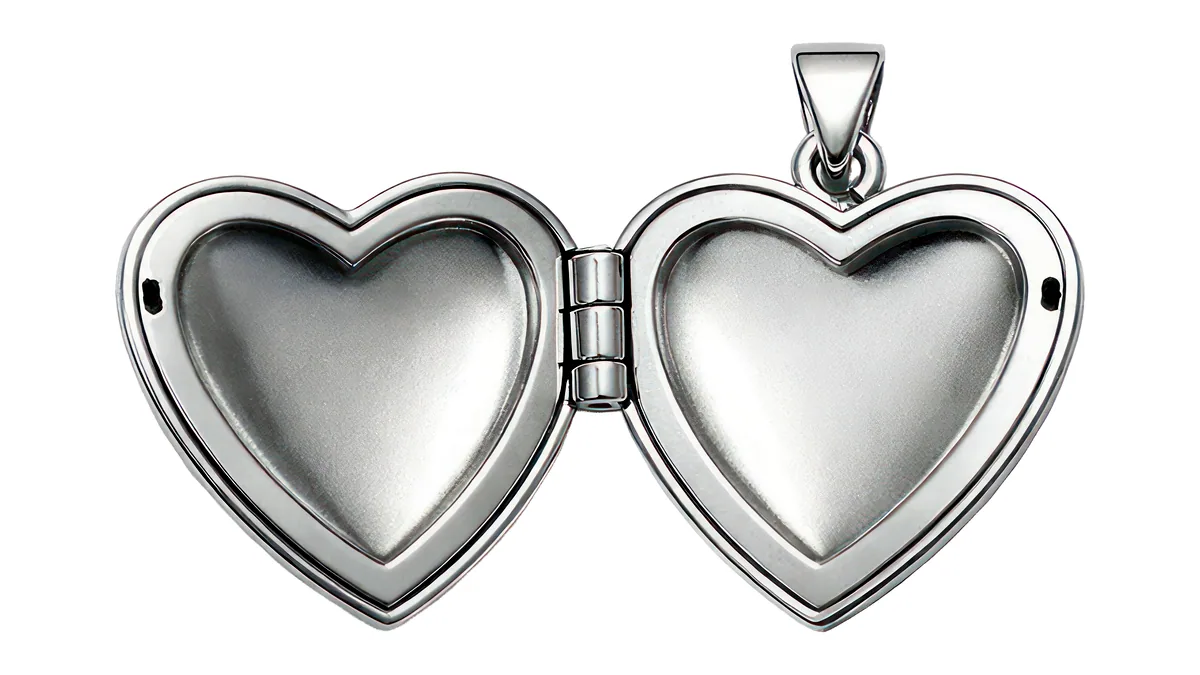
A sterling silver necklace locket is a pendant necklace that holds 1 photo inside a hinged 925 silver frame, and the locket is the small vessel that makes it a keepsake rather than a plain charm. It is the same silver as the rest of the 925 sterling jewellery we make: 92.5% pure silver and 7.5% alloy, stamped 925, and sized on a chain that runs from 16 inches (40.6 cm) for a dainty collar length to 20 inches (50.8 cm) for a relaxed drape. The 925 stamp on the clasp is the number that matters, because it is the assay mark that fixes the purity of the metal.
Every locket we ship is a piece of Sterling silver necklaces, shipped across the UK, so the parcel arrives within 2 working days on a tracked service. If you want to complete a set for a gift, the matching Necklace and earring sets in 925 silver sit on the same 18 inch (45.7 cm) chain as the locket, so the proportions line up. When a locket sits a touch long at the throat, a pair of Silver necklace extender chains adds 1.5 inches (3.8 cm) without cutting the original, and for a stack on the hand we carry Dainty 925 silver rings in sizes 52 to 56 on the European scale, which is the scale stamped inside the band. That is the whole range in one sentence: one vessel, one purity mark, and the sizing that goes with it.
What a sterling silver necklace locket is made of
A sterling silver necklace locket is built in two parts. The outer shell is a solid 925 silver cup or box, and the inner lid is a 0.8 mm thick hinged panel that lifts to take a photo or a small keepsake. The 0.8 mm gauge is the number that sets what fits inside, because a thinner lid would flex and a thicker one would not close flat on a 12 mm (0.47 inch) coin locket.
The 3 shapes and what each one holds
The shape decides the keepsake, and there are 3 that carry the range.
| Shape | Width | Holds |
|---|---|---|
| Coin locket | 12 mm (0.47 in) | 1 photo cut to 10 mm (0.39 in) diameter |
| Heart locket | 14 mm (0.55 in) | 1 photo cut to 11 mm (0.43 in) width |
| Oval locket | 16 mm (0.63 in) | 1 photo plus 1 small keepsake on a 6 mm (0.24 in) ribbon |
The coin locket is the classic and the smallest, so it sits closest to the throat. The heart locket is the most ordered for a keepsake, and the oval locket is the only shape in the range that takes a keepsake as well as a photo. Each is stamped 925 on the bail, and each closes with a single 0.5 mm spring hinge that has been tested to 500 open-and-close cycles.
Which locket design to buy, by size and length
To choose a locket, you match the shape to the keepsake and the chain to the wearer, and the 2 numbers to settle are the pendant width and the chain length. A 12 mm coin locket reads as dainty on a 16 inch (40.6 cm) chain, a 14 mm heart locket reads as dainty on an 18 inch (45.7 cm) chain, and a 16 mm oval locket needs a 20 inch (50.8 cm) chain so it sits below the collarbone rather than crowding it. If the wearer prefers a layered look, the locket goes on the longest chain of the 3, and the plain dainty links go on the shorter one, so the pendant drops free of the stack.
There is no single best locket in the range, and the answer changes with the keepsake and the neck, not with the price. A 10 mm (0.39 in) portrait photo fits a coin locket, a 11 mm (0.43 in) portrait fits a heart, and a 12 mm (0.47 in) portrait plus a keepsake fits an oval, and the chain length follows the shape as above. That is the whole decision in two columns.
Does a sterling silver necklace tarnish
Does a sterling silver necklace tarnish? Yes, because the 7.5% alloy in 925 silver is mostly copper, and copper reacts with sulphur in the air and in the skin to form a thin black film of copper sulphide, and a locket tarnishes faster than a plain chain because the hinged crevice holds a little more of the film than a smooth surface. A new locket shows the first visible tarnish in about 4 to 8 weeks of wear, and a locket left in a drawer for 12 months can show it in under 2 weeks, because the closed lid traps the sulphur. The tarnish is a surface film a fraction of a millimetre thick, so it is removed rather than worn away, and the 925 silver underneath is untouched. That is why the answer is yes and then why it matters less than it sounds.
How to take care of a silver necklace so it keeps its shine
To keep a silver necklace bright, you do 4 things in order, and they take about 3 minutes a month. The order matters, because a dry polish on a wet locket drags the tarnish into the hinge, and a rinse after a dry polish lifts the film back up.
- Wipe the locket dry with a lint-free cloth after every wear to lift the sulphur before it sets.
- Polish the shell once a month with a 925 silver cloth, rubbing the hinged crevice twice as long as the flat shell.
- Rinse and dry the locket after any contact with perfume, sunscreen or sea water, all of which carry the sulphur compounds that speed the film.
- Store the locket in a 925 silver anti-tarnish pouch with the lid open, so the closed crevice does not trap the film.
The anti-tarnish pouch works by binding the sulphur in the air, not by coating the silver, so it slows the film to about 1 a month instead of 1 a week, and the open lid is what keeps the crevice clean. A plain plastic bag does nothing, because it traps the air against the silver and speeds the film instead of slowing it.
Sterling silver necklace versus stainless steel
A sterling silver necklace and a stainless steel necklace differ in 3 ways that matter to a keepsake, and the difference is purity, not durability. The stainless steel in a dainty fashion chain is an iron alloy of 60 to 70% iron with chromium and nickel, it carries no purity stamp, and it does not tarnish at all because the chromium forms a passive film. The 925 sterling in a locket is 92.5% silver, it carries the 925 stamp, and it tarnishes as described above, but it takes a polish and holds a keepsake in a hinged vessel that the steel version does not. So the steel wins on zero maintenance, and the sterling wins on the 925 mark, the polish that brings it back, and the fact that it is the only metal of the two that takes the hinged 0.8 mm lid of a locket at all. The table below is the whole comparison.
| Feature | 925 sterling silver | Stainless steel |
|---|---|---|
| Purity mark | 925 | none |
| Tarnishes | yes, a surface film | no |
| Polishable | yes, with a 925 cloth | no |
| Holds a keepsake | yes, hinged locket | no |
The locket is a keepsake vessel, and that is the row that decides it, because the whole point of the pendant is to hold the photo and the keepsake in a 925 silver box, and no stainless steel chain offers a box at any price. A dainty steel chain is a layer to wear under the locket, and the two are not rivals on the same neck.
The 925 mark, the UK chain, and the 2 sizes to check
Before you order a locket, check the 2 numbers that the 925 mark does not cover, which are the photo size and the chain length. The 925 stamp on the bail confirms the 92.5% silver purity, but it says nothing about the 10 mm, 11 mm or 12 mm photo the lid will take, and it says nothing about the 16, 18 or 20 inch chain the pendant will ride on. So the 925 mark tells you the metal, and the photo size and the chain length tell you the fit. If the photo is already cut to a size, match it to the shape first and the chain to the wearer second, and the 2 numbers will agree. That is the last check on the locket, and the rest of the care is the 3 minute monthly routine above.