Sterling Silver Explained
Sterling silver, stamped 925, is an alloy of 92.5% pure silver and 7.5% other metals, most commonly copper, and the 925 hallmark is the official mark that certifies a piece meets that exact composition. The mark has been required by law in the United Kingdom since 1300 under the Assay Office system, and it remains the single most reliable way to confirm that a piece of silver jewellery is genuine rather than a base-metal imitation.
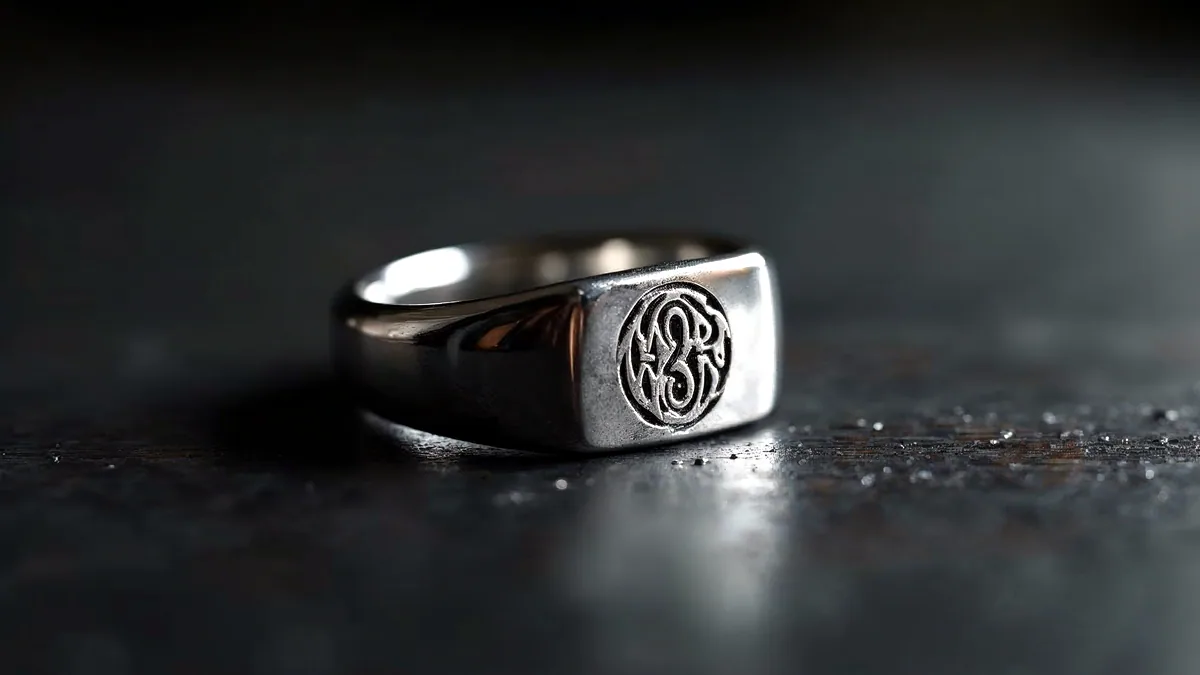
Understanding what the 925 mark actually certifies, how it differs from the other stamps you will see on silver, and where to find it on a ring, a necklace or a bracelet turns a confusing array of tiny engravings into a clear set of facts. This guide walks through the composition, the hallmarks, the common codes and the practical checks a buyer should make before paying the Sterling Silver Price for a piece. For a fuller look at how pure silver, sterling silver and other silver alloys compare in durability, tarnish and cost, see Silver vs Sterling Silver, and for a step by step walkthrough of every element a buyer should inspect on a finished item, read our guide to 925 sterling silver jewellery explained end to end.
What the 925 Hallmark Actually Means
The 925 hallmark means that an independent assay office or a certified maker has tested the piece and confirmed that it contains 925 parts of pure silver out of every 1,000 parts of the total metal, a purity of 92.5% by weight. The remaining 7.5% is an alloying metal, almost always copper, chosen because it adds hardness and tensile strength without shifting the white lustre that silver is prized for. Pure silver at 99.9% is too soft for everyday wear: a solid pure silver ring would deform within weeks, so the 7.5% alloy fraction is not a compromise but an engineering requirement that has been standard for roughly 700 years.
The number 925 itself is a fineness value, the same unit system that the World Gold Council uses for gold (750, 916, 999). When you see 925 stamped inside a ring shank or on the clasp of a chain, it is telling you the exact silver-to-alloy ratio, not a style code or a designer's serial number.
How to Identify a Genuine Sterling Silver Stamp
To identify a genuine sterling silver stamp, look for the 925 fineness mark in one of the standard locations on the piece, because the position and the accompanying symbols tell you who tested the metal and where. The United Kingdom has 5 assay offices (Birmingham, London, Sheffield, Edinburgh and Dublin, the last serving Ireland), and each one stamps a distinct town mark: an anchor for Birmingham, a tower for London, a castle for Sheffield, a lion for Edinburgh and a crown for Dublin. A piece that has passed the full British assay will carry 4 to 6 separate marks grouped in a row: the town mark, the 925 fineness, the maker's hallmark (a unique signature registered with the Assay Office), the assay office year letter and, on pieces over 7.78 grams of silver, a crown or a leopard's head indicating the weight bracket.
Common stamp locations by item type
- Rings: inside the shank, on the inner band surface
- Necklaces and chains: on the clasp, on a small tag, or on the bail of a pendant
- Earrings: on the post, on the back of the stud, or on the hinge of a huggie
- Bracelets: on the clasp, on the inside of a rigid bangle, or on a tag at the end of a chain
On smaller items under 7.78 grams, the full assay sequence is not required, so you may see only the 925 fineness and the maker's mark, which is why a pair of small earrings often carries just 2 stamps rather than 6. The absence of a full set on a small item is legal; the absence of any mark at all on a piece sold as sterling is not.
Sterling Silver Codes and Their Meanings
Sterling silver codes are the set of abbreviations, numbers and symbols that appear on or near the 925 mark, and they fall into 4 groups that together describe who made the piece, where it was tested, when, and in what metal. Knowing these 4 groups lets you read any sterling stamp in under a minute.
| Code or symbol | What it tells you | Example |
|---|---|---|
| 925 or .925 | Fineness: 92.5% silver by weight | The number you will see on virtually every sterling piece |
| STERLING | Word mark used mainly in the US, Australia and some EU makers | Often paired with the maker's initials |
| 925 S | Continental European notation: 925 fineness, S for Silver | Common on German and Austrian jewellery |
| 925 Ag | Same as 925 S but using the chemical symbol for silver | Seen on Swiss and some Nordic makers |
| Maker's hallmark | 2 to 4 letter or pictorial signature registered with the Assay Office | Tiffany & Co. uses a registered mark; independent makers use initials |
| Assay office year letter | A single letter that changes every year, set in a cursive or gothic font | The 2026 London letter is "h"; Birmingham uses a different sequence |
A piece stamped "925 S" and a piece stamped "925" are the same alloy at the same fineness; the difference is the market and the convention of the maker's country, not the metal content. If you are comparing a 925 S chain from a German estate sale with a 925 chain from a London high street, the silver in both is identical at 92.5%, and the price difference reflects design and brand, not purity.
Sterling Silver versus Pure Silver and Other Alloys
Sterling silver at 925 fineness sits in the middle of the silver spectrum, and understanding where it sits against 999 pure silver, 958 coin silver and 800 Argentium clarifies why jewellery makers and collectors treat each grade differently. Pure silver at 99.9% (stamped 999) is the softest form and is reserved for bullion bars, ingots and a small number of decorative items that will not be handled. Coin silver at 95.8% was the US standard for coins struck between 1837 and 1891 and is now mostly a collectible grade. Argentium silver at 935 or 940 fineness replaces some of the copper with germanium, which produces a black oxide instead of the usual grey tarnish and is marketed as "tarnish resistant sterling."
The 7.5% copper in standard sterling is what makes it work as a wearable metal. Copper raises the Vickers hardness from roughly 25 for pure silver to around 80 for sterling, enough to hold a setting, survive daily contact and be soldered at the temperatures used in jewellery workshops. That trade-off is exactly why a 925 ring will keep its shape for decades while a 999 ring would not, and it is the reason the 925 hallmark exists as a guarantee: the number certifies both the silver content and the alloy that makes the piece structurally viable.
Where to Check the Hallmark and What to Look For
Where to check the hallmark on a piece of sterling silver jewellery depends on the item type, but the 3 checks that catch most fakes are the same regardless of whether you are looking at a ring, a pendant or a bangle. First, locate the stamp with a 10x jeweller's loupe or a phone macro lens, because the 925 number and any maker's mark are typically between 0.5 mm and 2 mm tall and will be invisible to the naked eye on a small setting. Second, compare the stamp depth and edge sharpness: a genuine hallmark is struck or electro-stamped into the metal with clean, crisp edges, while a fake is often printed on, laser-etched with soft edges, or stamped so shallowly that the impression barely registers under a fingernail. Third, run a magnet test and a density check as a quick screen; sterling silver is not magnetic and has a density of about 10.4 g/cm3, so a piece that sticks to a fridge magnet or feels noticeably lighter than a steel coin of the same size is not sterling, even if it says 925.
Quick verification steps
- Find the 925 or STERLING stamp in the location expected for the item type
- Examine the stamp under magnification for crisp edges and even depth
- Check for an additional maker's hallmark or assay office mark if the piece is over 7.78 g
- Confirm the piece is not attracted to a magnet
- Compare the weight against the expected density of 10.4 g/cm3 for the stated volume
If a piece passes all 5 of these checks and carries a 925 fineness mark with a registered maker's hallmark, it is sterling silver to the 92.5% standard. For pieces you are less sure about, a local assay office or a jeweller with a portable X-ray fluorescence gun will give a composition reading in under 30 seconds, and the 925 mark on the piece is the starting point that tells the technician which window to expect in the result.
Where to start
 1. COST OF STERLING SILVERSterling Silver PriceThe cost of sterling silver, today in the UK, is about 1.40 to 1.60 pounds per gram at the bullion spot.
 2. DIFFERENCE BETWEEN SILVERSilver vs Sterling SilverSilver and sterling silver differ in one number: silver is a pure metal, while sterling silver is an alloy that is 92.5% silver and 7.5% other metals.
 3. START HERESterling Silver and Gold RingsSterling silver rings gold describes a ring whose band is 925 sterling silver finished in a gold colour.
Sterling silver educational and reference guides
 STERLING SILVER925 vs 999 Silver925 vs 999 silver comes down to an alloying choice that runs through every sterling ring and every 999 fine bar you buy.
 HOW TO TELL IF STERLINGIdentify Real Sterling SilverSterling silver is the 92.5% pure silver alloy you buy for jewellery. A single test can be fooled, so run at least 3 and trust the pattern.
Other sections
Inherited addresses in this section
/hallmark.htmlSterling Silver Explained/hallmark.htmSterling Silver Explained