925 silver engagement rings
925 silver engagement rings are sterling silver rings that carry a single centre stone, a diamond or a lookalike such as cubic zirconia or moissanite, and they sell from about 50 to 250 pounds, which is 3 to 8 times under the price of a comparable 14 karat gold ring. The "925" stamp means 92.5% pure silver, the alloy that has carried European rings for 850 years, and the same setting that holds a 0.2 carat diamond in gold holds it just as firmly in silver, because the prongs and basket are cut to the stone, not to the metal. This page compares the 3 stone options, the 4 ring styles and the UK buying notes, so a buyer can match a budget to a ring without overpaying.
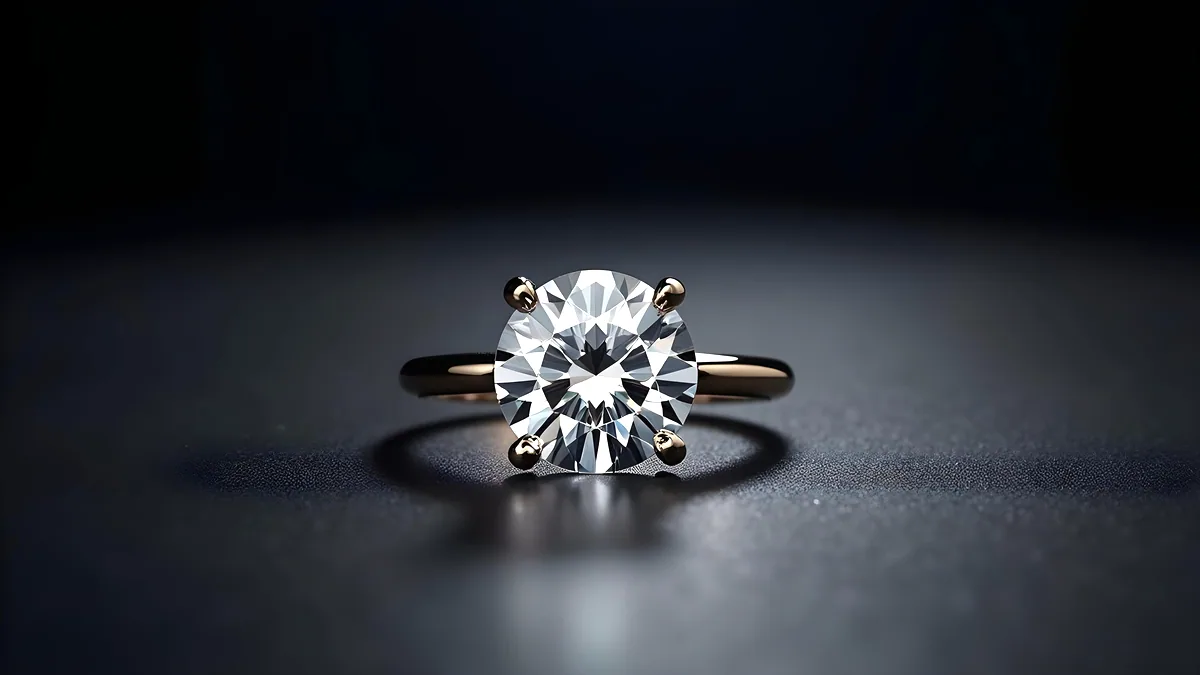
The value story starts in the metal. Sterling silver costs about 2 pounds per gram on the spot market, while 14 karat gold runs 45 pounds per gram, so the ring body of a 4 gram solitaire adds roughly 8 pounds in silver against 180 pounds in gold. The gap is large enough to move a 30 pound stone into a 0.2 carat diamond, and the "925 sterling silver rings" that do this are the ones shoppers search for when the budget is fixed and the look is not negotiable. A 3.5 carat moissanite solitaire in 925 sterling silver, the size many couples choose, fits under 150 pounds with the setting included.
Diamond, Cubic Zirconia and Moissanite in 925 Sterling Silver
The stone is the decision that sets the price of a sterling silver ring, and the 3 options sort into a clean price ladder. A diamond is the only stone that is traded by carat weight at a global rate, so it holds its value at resale and it scores 10 on the Mohs hardness scale, the hardest natural material. Moissanite scores 9.25 and cubic zirconia scores 8, which means both look nearly identical in the setting but wear differently over 5 years. The table below lines up the 3 stones on the 4 numbers a buyer actually checks: price per carat, hardness, fire (the sparkle in white light) and resale value.
| Stone | Price per carat | Mohs hardness | Fire (white light sparkle) | Resale value |
|---|---|---|---|---|
| Diamond | 1800 to 4500 pounds | 10 | High | Holds value |
| Moissanite | 90 to 150 pounds | 9.25 | Very high | Nominal |
| Cubic zirconia | 10 to 30 pounds | 8 | Medium | None |
A 0.2 carat diamond in 925 sterling silver is the sweet spot for many UK buyers: the stone is visible, the ring costs about 180 pounds, and the metal costs less than 10% of the total. For the same look on half the budget, a 0.2 carat moissanite ring lands near 70 pounds, and cubic zirconia drops the whole ring under 40 pounds, which is where "cheap silver engagement rings uk" searches cluster. The celtic twist that appears in the next section does not change the stone math; it only adds 5 to 15 pounds for the extra hand-forging.
Styles and Settings for a Silver Engagement Ring
Style is where the look is decided once the stone and metal are fixed, and the 4 settings that dominate silver engagement rings are the solitaire, the halo, the three-stone and the celtic knot. Each setting holds the centre stone differently, so the ring sits on the finger at a different height, and the prong count decides how much of the stone is visible from the side.
- Solitaire: a single centre stone on 4 or 6 prongs, the cleanest profile and the one that shows the stone most
- Halo: a centre stone ringed by 12 to 16 small pavé stones that add 1 to 1.5 carat of apparent size for 20 to 40 pounds
- Three-stone: a centre stone flanked by 2 smaller stones that symbolise past, present and future, and add 10 to 20% to the price
- Celtic knot: interwoven band work that wraps the stone, the style behind the "celtic silver engagement rings" search, and it adds a hand-forged look that machine-cut rings do not copy
The solitaire and the celtic knot are the 2 styles that photograph best in silver, because the metal is bright enough to read against skin without the gold wash. For the partner who wants the ring to read as a statement rather than a whisper, the "Chunky 925 silver rings" line, a 6 to 8 millimetre band with a celtic band, is the natural pick, and it is the same band that a man wears as a "Men's 925 silver rings" piece, so a couple can match sets for under 250 pounds combined.
Price and Budget in the UK Market
Price is the question that brings most buyers to a sterling silver engagement ring, and the UK market sorts into 3 bands that map to the 3 stones above. The bands below are the real price points for a new ring bought from a UK jeweller or a UK online seller in 2026, not the secondhand numbers that appear in classifieds.
- Under 50 pounds: cubic zirconia solitaire or halo, the "cheap sterling silver engagement rings" tier, fine for a proposal where the budget is the whole conversation
- 50 to 150 pounds: moissanite solitaire, halo or three-stone, the tier where the stone looks indistinguishable from a diamond at arm's length
- 150 to 400 pounds: diamond solitaire at 0.2 to 0.5 carat in 925 sterling silver, the tier where a buyer gets a genuine diamond without the gold premium
The budget that fits most couples is the moissanite tier, because a 150 pound ring there looks like a 1500 pound ring on the finger, and the difference is only visible to someone who holds the stone up to a loupe. A woman who already owns gold jewellery should choose the diamond or moissanite tier over cubic zirconia, because the whiter fire of the two stones matches the cool tone of silver better than the warm fire of cubic zirconia, which can read yellow next to a gold wedding band. For a first ring or a ring that will be swapped for a diamond ring later, cubic zirconia is the honest pick, and it costs less than a single dinner for two in London.
Buying a 925 Sterling Silver Ring in the UK
Buying notes are where a silver ring either survives daily wear or starts to dull and scratch within a year, and the 5 checks below are the ones a UK buyer should run before paying. The first check is the stamp: a genuine ring carries a 925 hallmarked or a 925 etched on the inner band, and the Assay Office marks from Birmingham, London, Sheffield or Edinburgh are the ones to look for on a UK-sold piece.
- Check the 925 stamp on the inner band and confirm it matches the Assay Office mark, a 4 letter or 5 letter symbol, not just a number
- Confirm the ring size in both UK and US systems, because a UK size S is a US size 6 and a size J is a US size 4, and silver bands run 1 size smaller than gold bands of the same width
- Ask for a rhodium plating certificate, because the rhodium layer is 2 to 3 microns thick and it is what keeps a silver ring white, and it re-platings at 15 to 25 pounds every 1 to 2 years
- Budget for the ring size to change, because 70% of engagement rings get resized at least once, and a silver ring resizes for 10 to 20 pounds, cheaper than the 40 to 80 pounds a gold ring costs
- Keep the ring away from hot tubs and chlorinated pools, because chlorine lifts the rhodium layer in 3 weeks of weekly use and it tarnishes the silver beneath, so a 15 pound re-plating every 6 months is the realistic maintenance
A ring that passes the 5 checks is a ring that will look new for 5 years, and the maintenance cost, a 20 to 40 pound re-plating per year, is the real price of the silver. The "Silver Toe Rings in 925 Sterling Silver" line sits at the low end of the same metal family, a 30 to 60 pound ring that uses the same 925 stamp and the same rhodium plating, and it is the entry point for a woman who wants to test the silver look before committing to a finger ring. The engagement ring, the toe ring and the chunky band are all the same alloy at the same 92.5% purity, and the difference between them is the setting, the size and the occasion, not the metal.