Gothic 925 silver rings
Gothic sterling silver rings are 925 dark and ornate designs that take the 92.5% silver standard and dress it in blackened metal, cross motifs and skull carvings for a deliberately somber look. A typical gothic ring weighs 6 to 14 grams and runs in sizes 4 to 13, which means the piece is built from the same sterling base as a classic band, then pushed toward the dramatic end of the scale with a matte finish and heavy sculptural detail.
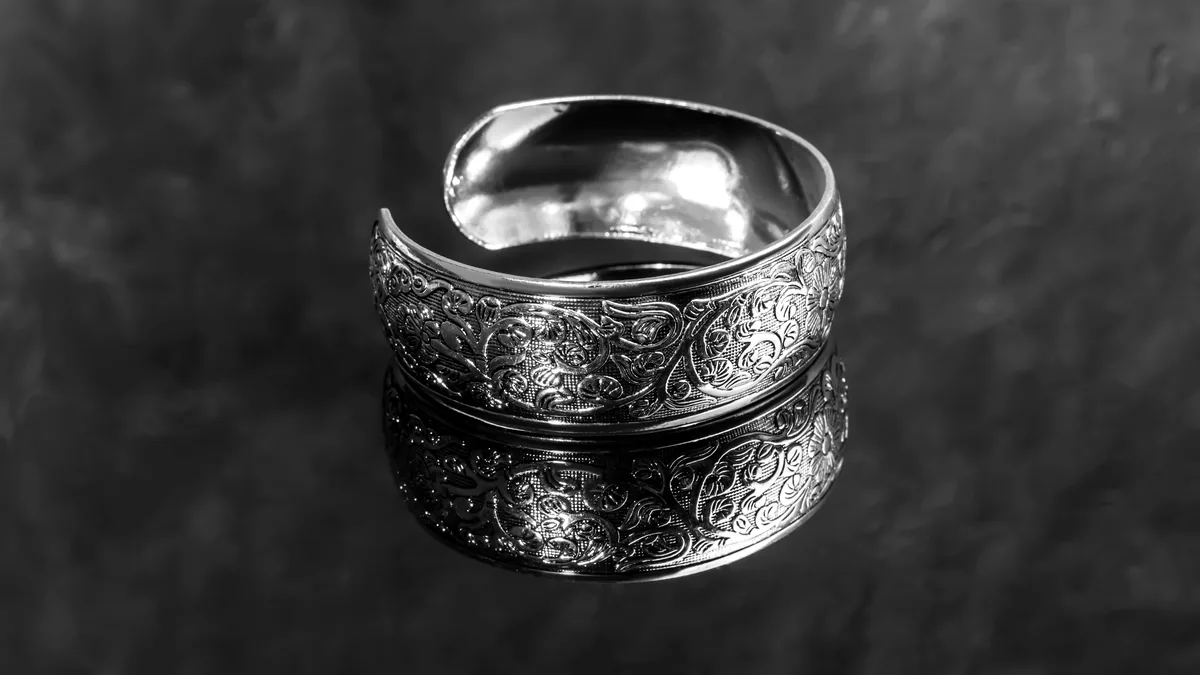
The dark look is not a different metal. A 925 sterling silver ring is alloyed with 7.5% copper for strength, then finished with blackening, oxidizing or plating to deepen the recesses. That is why the same cast cross reads as ornate gothic in a blackened state and as a bright statement piece when polished back to a shine.
What makes a ring a gothic 925 silver ring
Gothic 925 silver ring styles share four recurring traits that separate them from a plain sterling band. Each trait is a choice in finish, shape or symbol, so you can mix and match to dial the look up or down.
- Blackened or oxidized surface, which darkens the grooves while the high points stay bright.
- Heavy cast or sculpted detail, such as a cross, a skull or a pointed arch.
- Ornate filigree and scrollwork drawn from medieval and Victorian jewellery.
- Pointed, gothic-letter and cathedral-arch forms in the setting.
The finish is the first place the eye lands, so a 925 sterling silver ring that keeps a high polish but adds a dark center stone often reads as softer than a fully blackened piece.
925 sterling silver rings and the blackening process
Blackening on a 925 sterling silver ring is a surface treatment, not a different alloy. Two methods cover most pieces you will buy.
Fire blackening
Fire blackening heats the ring in a flame so the surface forms a thin layer of silver oxide, then a wipe seals it. The result is a warm, smoky tone that sits on top of the metal, so the edges wear bright over time and the piece develops a lived-in character.
Chemical blackening
Chemical blackening uses a sulfur-rich solution to darken the recesses of the casting in a single dip. It produces a deeper, more even matte that keeps its contrast longer, which is why many ornate gothic pieces favor it. Either method leaves the 925 mark intact, because the stamp is applied before the ring is finished.
A quick way to judge which finish suits your hand: hold the piece to the light and watch how much of the dark area catches. A ring that flashes bright on every curve is the softer option, while a ring that stays matte is the bolder one.
Signature motifs: cross, skull and cathedral arch
The motifs carry the gothic 925 silver ring from a band into a statement, and three of them appear in nearly every dark collection.
- The cross, from a slim Latin cross to a heavily cast crucifix, is the most common anchor.
- The skull, rendered as a full face or a single jaw, signals the punk and metal end of the style.
- The cathedral arch and pointed gothic lettering frame a stone or wrap the shank in a vertical, ecclesiastical line.
Because these motifs are cast rather than engraved, they add real depth and shadow, which is what gives a gothic 925 silver ring its three-dimensional, ornate quality. A Men's 925 silver rings piece usually leans into the cross and skull, while a 925 silver engagement ring in this style often keeps the cathedral-arch setting and pairs it with a black spinel or a dark diamond to hold the romance without losing the dark edge.
Where the dark look lands in daily wear
A gothic 925 silver ring fits a range of everyday and seasonal looks, and the styling depends less on the metal than on what you pair it with. Three settings show the range.
- A single blackened cross band with a plain t-shirt and dark denim for a low-key daily look.
- A stacked set of ornate and plain rings that moves a gothic 925 silver ring into a layered, editorial style.
- A skull signet with a black leather jacket for the full metal and goth aesthetic.
The same principle works at the foot of the outfit. A Silver Toe Rings in 925 Sterling Silver set brings the blackened, ornate detail to the toes, which is a useful way to test a gothic finish before you commit to a full ring. Because the finish is what defines the look, matching the toe ring and the finger ring to the same matte level keeps the outfit coherent from hand to foot.
Caring for a blackened 925 sterling silver ring
Caring for a blackened gothic 925 silver ring is mostly about preserving the dark contrast, and the rule is simple: skip the polish that the bright pieces need.
- Clean with a soft, dry cloth and warm soapy water only when the surface is genuinely dirty.
- Avoid abrasive silver polish, which strips the blackening and flashes the piece bright.
- Store each ring separately in a soft pouch to stop the oxidized surfaces scratching each other.
Wear also does the work. The high points of a fire-blackened ring will brighten naturally within a few months, and that slow reveal is part of the appeal. If the look starts to fade too fast, a fresh coat of a clear protective lacquer restores the matte in minutes and buys back the original contrast.
Buying a gothic 925 silver ring in the UK
Buying sterling silver gothic rings in the UK is straightforward once you check three things before you pay, and the same checks work online and in a jeweller's window. The 925 or 925 sterling silver stamp confirms the metal, so a piece without a mark is not the standard you are paying for. Next, confirm the finish method, because fire blackening ages differently from chemical blackening and you want the one that matches how long you want the matte to hold. Finally, check the size, since ornate cast gothic 925 silver ring shapes run a little wide on the finger and often fit half a size smaller than a plain band. Sterling silver gothic jewellery in the UK market follows these same three checks, so a cross, a skull or an arch all pass or fail on the mark, the finish and the fit, which keeps your gothic 925 silver ring choice consistent no matter which motif you pick.