Sterling Silver and Gold Rings
Sterling silver rings gold describes a ring whose band is 925 sterling silver finished in a gold colour, and the gold you see is almost always a coating, not the metal of the band. The 925 in the stamp means 92.5% pure silver (7.5% alloy), and the gold layer is measured in microns, so the two metals coexist by design. The same finish appears on necklaces, where a 925 silver necklace gold plated is the exact same construction applied to a pendant chain.
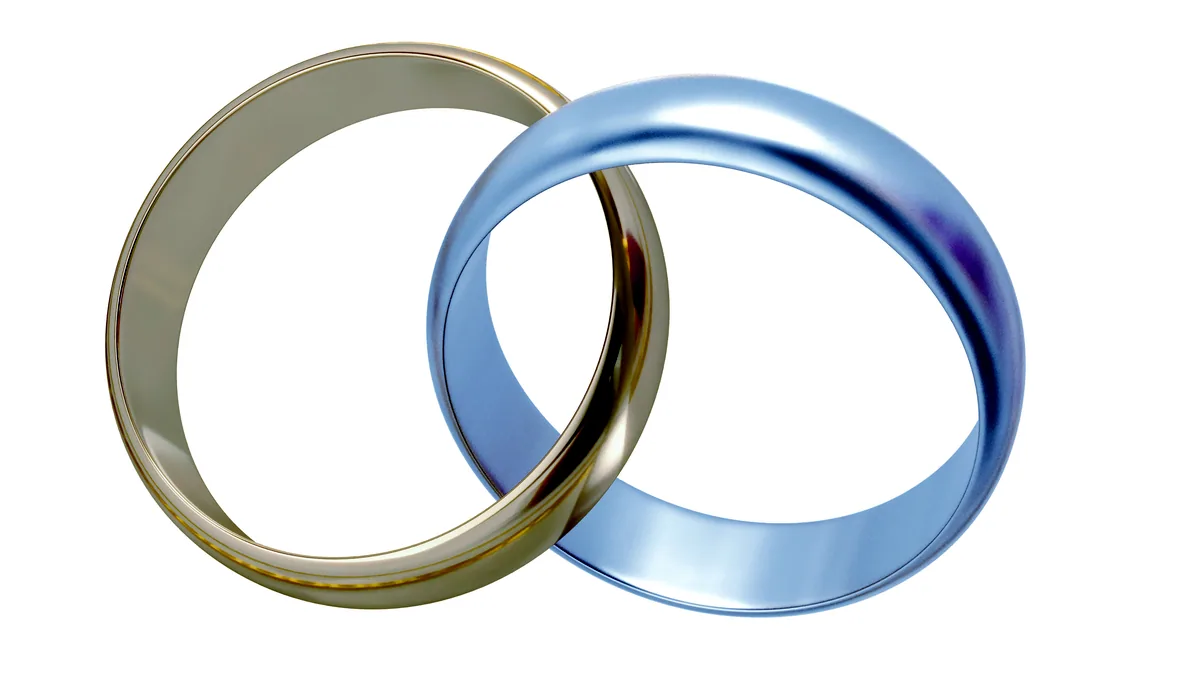
What "sterling silver rings gold" actually means
A sterling silver ring is defined by its 925 alloy, not by the colour you see. The gold you see can be a plating, a gold core (gold-filled) or a separate metal set in as two-tone, and the three behave differently because only the coating is thin. Below, the three related pages that map the alloy side of the question: Sterling Silver Explained covers the 925 alloy itself, Sterling Silver Price tracks the 925 silver rate, Silver vs Sterling Silver sorts fine silver from 925 alloy, and 925 sterling silver rings lists the ring styles cut from solid 925 silver.
The three ways gold sits on a sterling band, compared by construction, depth and wear:
| Finish | Gold content | Layer depth | What wears away |
|---|---|---|---|
| Gold-plated | Coating only | Around 0.5 to 1 micron, 2 micron on heavy plating | Gold colour, exposing 925 silver |
| Gold-filled | Real gold bonded to the band | At least 5% of the total weight, about 10 times the plating | Gold colour slowly, band stays solid |
| Two-tone | Solid gold section | Solid, not a coating | Nothing; 2 metals, 2 marks |
Tell a plated band from solid silver
To tell a sterling silver ring from a plated one, start with the magnet, then the stamp. Sterling silver is not magnetic, so a magnet that pulls the band hard tells you the core is steel, not 925 silver. A soft 925 silver stamp with no gold mark points to solid silver, while a plated ring often carries an extra gold or plating mark. The silver test kit confirms the core: apply a drop and read the colour, because the plating wears away and the alloy underneath shows through.
Tell sterling silver from white gold
To tell sterling silver from white gold, compare weight, colour and marks, because the two look close and differ in density and alloy. White gold is an 18k gold alloy whiteened with palladium or nickel, and it is denser, so a white gold band of the same size weighs more than a sterling one. Sterling silver carries a 925 or 925.S stamp; white gold carries a 750 (18k) or 585 (14k) karat mark. The colour tells too, since white gold holds its white coat, while unrhodium-plated sterling trends a soft grey. Sterling also tarnishes to black and polishes back, which white gold does not do.
Gold-plated, gold-filled and two-tone rings compared
Choosing a gold and sterling silver ring comes down to how long the gold coat must survive daily wear, and the 3 finishes rank by depth and price. Gold-plated is the budget option, priced like solid silver with a 0.5 to 1 micron coat that thins where the ring meets skin and keys. Gold-filled is the middle path, with at least 5% gold by weight and a layer about 10 times thicker than plating, which keeps the gold visible through years of wear. Two-tone is the solid option, pairing a 14k or 18k gold section with the 925 band, so the gold never wears away and the ring shows both the karat and 925 marks.
Gold on a 925 silver necklace
Gold on a 925 silver necklace follows the same plating logic as a ring, and the finish choice drives both the price and the life. A gold-plated chain runs 0.5 to 1 micron over the 925 links and suits light wear, while a gold-filled chain carries the 5% gold core and lasts longer. Two-tone necklaces set a solid gold pendant on a 925 chain, keeping the gold piece permanent. The care is identical: store the piece dry, keep it away from perfume and chlorine, and polish the 925 sections with a soft cloth, because tarnish builds on the silver links while the gold coat stays bright.
Reading the marks on a ring
Reading the marks on a gold and sterling silver ring is the fastest way to identify the construction, because the maker stamps both the base metal and the finish. A 925 or 925.S stamp confirms the sterling base, and a karat mark such as 14k or 18k confirms solid gold, while a "GF" or "1/20" mark means gold-filled and a bare gold colour with no gold mark usually means plating. A two-tone ring shows both marks side by side, a 750 gold mark next to the 925 silver stamp, which is the clearest proof the gold is solid and the band is real 925 silver.
Care for mixed-metal rings
Caring for a mixed-metal ring keeps the gold coat and the 925 band wearing evenly, and the routine is the same 4 steps for plated, gold-filled and two-tone pieces. Store each ring in a dry, separate pouch to stop the gold coat and the silver from scratching one another. Keep the ring away from chlorine, hot baths and perfume, which strip plating and accelerate silver tarnish. Wipe the band with a soft cloth after wear to remove the oils that dull both metals. Re-plating restores a worn gold coat, though the 925 silver underneath always remains, so the ring never loses its base metal.