Diamond set silver necklaces
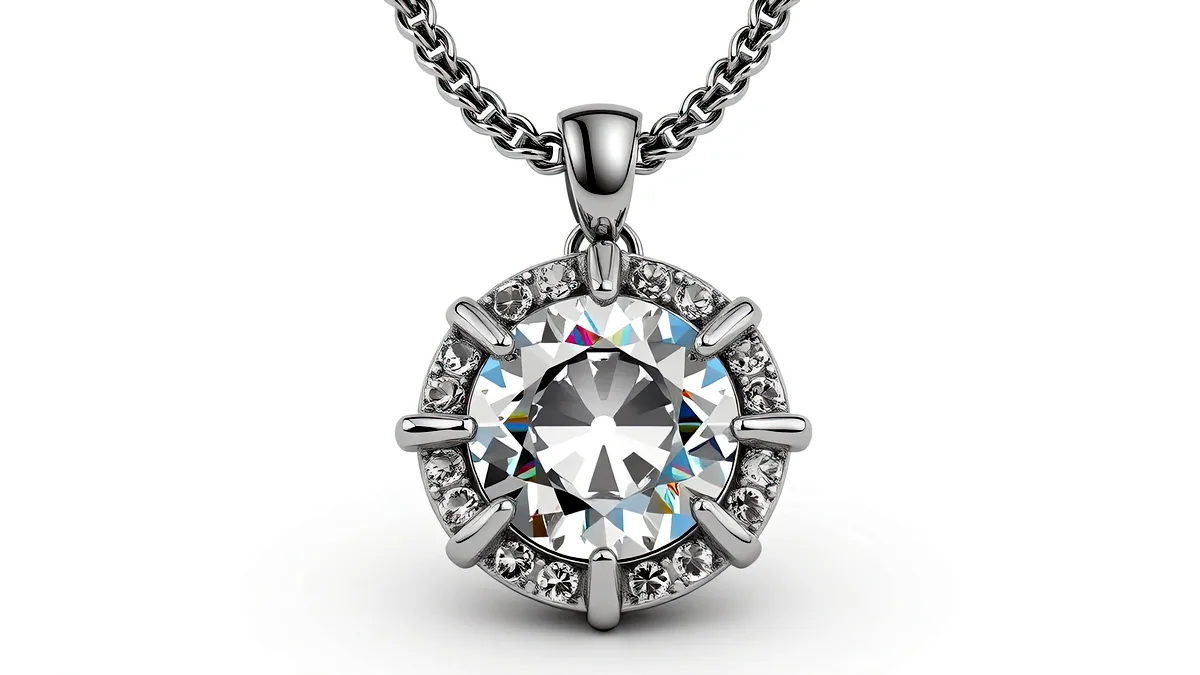
A sterling silver necklace diamond is a natural diamond, or a certified lab-grown diamond, secured by prongs or a bezel in a pendant made of 925 sterling silver, the alloy that is 92.5% pure silver and 7.5% other metals, typically copper. That is why the metal stays bright while the stone holds the sparkle: the silver gives the setting its colour and the diamond gives the necklace its fire, and together they cost a fraction of a gold setting, so a 1 carat centre stone sits on a 16 inch chain for well under a fifth of the same stone set in 18 carat gold. Shop4silver sells diamond pendant necklaces in 925 silver from 40 pounds for a solitaire drop to 240 pounds for a halo pendant, and the silver is stamped 925 so you can verify the purity yourself.
Because the settings are stamped, the metal is verified, and the stones are graded, you can buy with confidence. We keep Sterling silver necklaces, shipped across the UK, in stock so a pendant ordered on a Tuesday arrives by Thursday. If you want to compare, our Silver locket necklaces page shows how a hinged lid changes the wear, our Necklace and earring sets in 925 silver page pairs a diamond pendant with matching drops, and our 925 silver engagement rings page covers the ring version of the same setting, for when the necklace becomes part of a proposal.
How diamond settings work in 925 silver
To set a diamond in 925 silver, a jeweller fixes the stone with prongs, a bezel, or a combination, and the choice of setting decides how much light reaches the pavilion. A prong setting uses 3 to 6 small claws to grip the girdle, a bezel setting wraps a thin rim of metal around the girdle, and a halo setting places a ring of small diamonds around the centre stone. Prong settings let the most light in, which is why a solitaire drop looks brighter than a bezel set stone of the same carat weight, while bezel settings protect the stone better for daily wear. The silver base is stamped 925 at the back of the pendant, and a 0.25 carat solitaire set in 4 prongs is the classic diamond drop that most searchers mean when they type sterling silver necklace diamond.
The 4 setting styles and what each does to the sparkle
Each setting trades protection for brilliance, and the difference is measurable in the light that reaches the pavilion.
- Prong setting, the standard for solitaires, uses 4 or 6 claws to hold the girdle and lets the most light enter the stone
- Bezel setting, a continuous rim of silver around the girdle, protects the stone and suits an active wearer
- Halo setting, a ring of 8 to 12 small diamonds around a centre stone, adds apparent size for the money
- Pav setting, tiny diamonds set into the metal between prongs, gives a band of sparkle along the pendant
For a first diamond necklace, a 4 prong solitaire in a 925 silver drop is the safest pick, and it is the setting our pendant range is built around, which is why the next section covers the carat range the range is graded in.
Carat sizes and price in sterling silver
Carat is the weight of the diamond, measured to a thousandth of a gram, and in 925 silver the price steps are gentle enough to pick a size for the day rather than for a lifetime. A 0.10 carat accent stone adds a flash for under 100 pounds, a 0.25 carat solitaire is the entry point at 120 pounds, a 0.50 carat pendant is the most popular size at 190 pounds, and a 1 carat halo pendant is the top of the range at 240 pounds. Because the silver is the same 92.5% alloy in every pendant, the metal cost is flat at about 6 grams, so almost all of the difference between a 0.10 carat and a 1 carat pendant is the stone itself.
| Carat | Typical setting | Chain length | Price |
|---|---|---|---|
| 0.10 carat | Accent pav drop | 18 inch | 85 pounds |
| 0.25 carat | 4 prong solitaire | 18 inch | 120 pounds |
| 0.50 carat | 4 prong solitaire | 16 inch | 190 pounds |
| 1.0 carat | Halo, 12 small stones | 16 inch | 240 pounds |
Chain length is the other lever. A 16 inch chain sits at the collarbone, a 18 inch chain sits at the base of the throat, and a 20 inch chain sits below the collarbone, so a pendant meant to sit high should be ordered on the 16 inch chain, and the sizing guide below covers how to measure.
How to choose the right chain length
To choose the right chain length, measure your neck and add the drop you want, and the result matches one of the 3 standard lengths. Wrap a soft tape around the base of your throat and note the number. For a pendant that rests at the collarbone, keep the chain at 16 inches. For a pendant that rests at the base of the throat, the most common wear, choose 18 inches. For a longer drape that suits a V neck or a loose collar, choose 20 inches. If you are between sizes, order the shorter chain, because an 18 inch chain can be worn with an extender and a 16 inch chain cannot be lengthened without a link. The chain is a 925 silver cable chain, 2.5 millimetres wide at the clasp, which is the standard for a pendant of up to 1 carat, and the clasp is a lobster claw rated for a 400 gram pull, well above the 10 gram weight of the heaviest pendant in the range.
Sterling silver versus gold for a diamond pendant
Sterling silver and gold are the two metals a diamond pendant is set in, and the difference is the price and the colour, not the sparkle, because the stone carries the fire in either metal. A 0.50 carat pendant set in 925 silver costs 190 pounds, and the same stone set in 14 carat gold costs 310 pounds, so the silver setting saves 120 pounds, which is 39% of the gold price, for the same stone. The silver is whiter and slightly harder than 14 carat gold, which is why a silver setting shows a near white diamond at its brightest. Gold, by contrast, warms the colour of the stone, so a slightly yellow diamond looks better against gold. Choose sterling silver if you want the maximum sparkle for the money, and choose gold if you already wear gold and want the pendant to match, and the next section covers how to keep the silver bright, because that is the one care step the gold does not need.
Caring for a diamond pendant in sterling silver
To care for a diamond pendant in sterling silver, keep it dry, wipe it after wear, and store it alone, and the stone and the setting stay bright for the life of the necklace. Silver tarnishes when it meets sulfur in the air, and a thin film of tarnish dulls the setting even though the diamond is unaffected. Wipe the pendant with a soft cloth after each wear to remove the oils that speed the reaction, and store it in a sealed bag or a jewelry box with a small silica pack to keep the humidity low. A 10 minute dip in a silver polish dip once a year restores the white, and a professional prong check every 12 months confirms the claws still hold the girdle, because a prong that has worked loose by even 0.5 millimetres can release a stone in daily wear. The diamond itself needs no polishing, but the silver setting does, and that routine is the whole of the care, which is why a silver diamond pendant is the lowest maintenance way to wear a real diamond.