Silver jewellery care and storage
Sterling silver jewellery cleaning means removing the dark grey tarnish that silver develops in air, and the routine is a soft cloth for daily polish, a dip in a baking soda paste for a deep clean, and a sealed pouch for storage. Sterling silver is an alloy of 92.5% silver and 7.5% copper, and the copper is the part that oxidises into the tarnish layer, so the whole care system is built around controlling how much air and moisture the surface meets. A single polished piece, a plain band ring at 3 grams or a statement necklace at 40 grams, will outlast its owner if it follows these 3 steps every week. Because the page is built by a new, unaffiliated project called SilverStandard and is not connected to any earlier shop4silver.co.uk owner, the care rules here are written from the alloy and the storage, not from a brand.
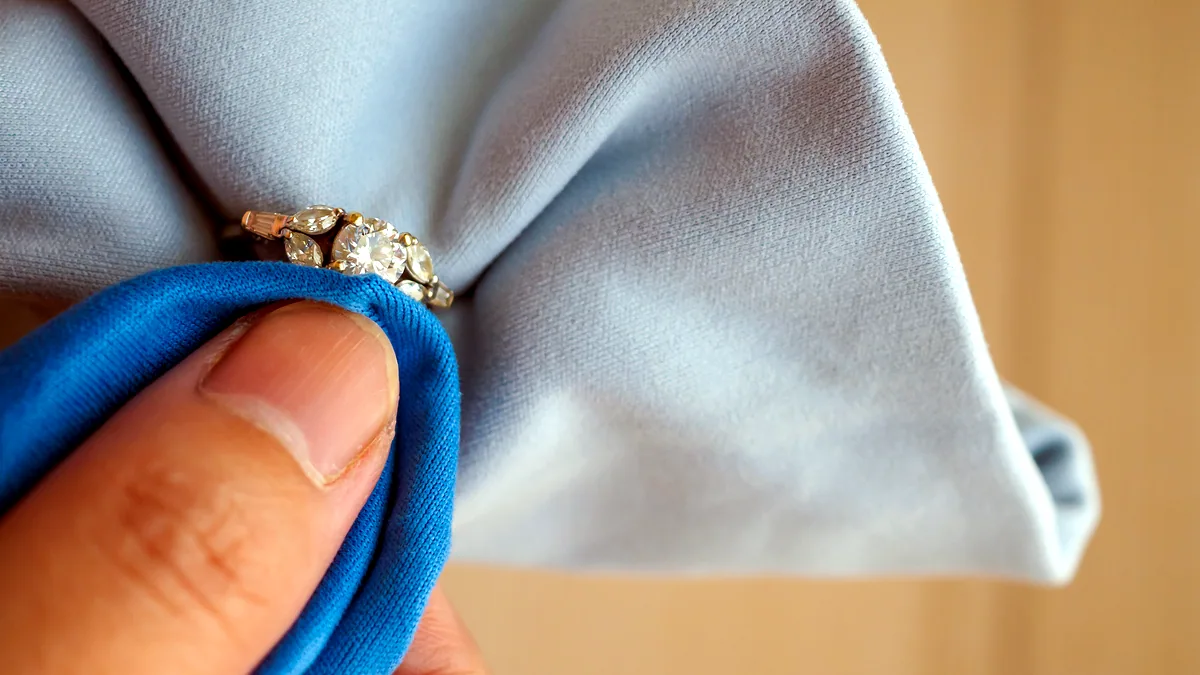
The routine below assumes genuine 925 sterling silver jewellery explained end to end, from the hallmark to the storage pouch, and it points to a deeper guide for rings when a band needs more than a cloth. For a full treatment of a tarnished ring, see Clean sterling silver rings at home, which covers the 15 minute soak, the polishing pad, and the re-seal for a piece that has sat in a drawer for a year. The care system itself has 4 layers: surface polish, deep clean, protection, and storage, and each layer is a job you do on a set schedule rather than a reaction to a stain.
What sterling silver is and why it tarnishes
Sterling silver tarnishes because copper in the alloy reacts with sulphur and oxygen in the air. The silver part of the 92.5% does not react; the 7.5% copper does, and the reaction produces silver sulphide, the dark grey film you wipe off with a cloth. The rate depends on 3 variables: humidity, sulphur in the environment, and how long the piece was exposed. A ring worn daily meets the skin, which is warm and slightly acidic, so it polishes itself partly through friction and partly through the skin's oils pushing the thin sulphide layer off. A necklace in a drawer meets none of that, so the same 925 surface that looks bright on your hand can look grey in the same 30 days in a drawer.
The alloy in numbers
The standard for sterling silver is set by assay, and the mark on a genuine piece is 925, meaning 925 parts silver per 1000 of the alloy. The remaining 75 parts are mostly copper, with small amounts of zinc or nickel in some modern castings. Pure 999 silver is too soft for rings and chains, which is why the copper is added to raise the hardness. Irish silver, such as a piece from the Cork or Waterford workshops, is stamped 925 in the same way, and the mark on a handmade Irish ring is the same legal hallmark as the mark on a mass-made band from any other workshop. The numbers are the point: 925 is the floor for sterling, and anything stamped below that, such as 900 or 800, is a lower grade and tarnishes differently because it has more copper.
Cloth care for daily wear
A silver polishing cloth is the first line of defence, and it works by a chemical in the cloth, not by friction alone. The cloth is impregnated with a mild abrasive and a tarnish-lifting compound, so a few slow passes across the surface pull the sulphide layer off and leave a thin protective film behind. You use the cloth after each wear, on a plain band or a studded pendant, and the pass takes 10 seconds. The cloth is not for plated pieces, and it is not for gold; a gold-plated ring needs a dry soft cloth with no compound, because the compound strips the thin gold layer. For a piece with a gold overlay, such as a silver-gold two-tone pendant, you polish only the silver face and let the gold face air dry.
Cloth versus paste
| Method | Time per pass | Best for | Not for |
|---|---|---|---|
| Polishing cloth | 10 seconds | Light tarnish on a daily-worn ring | Deep black tarnish, plated surfaces |
| Baking soda paste | 1 minute | Grey film after 30 days in a drawer | Enamel or coloured stones |
| Silver dip solution | 15 seconds | Chain mail and heavy pendants | Pearls, opals, any porous stone |
| Ammonia soak | 2 minutes | Heavy tarnish on a thick band | Any piece with a plated or gold overlay |
The cloth is the default. The paste is the step-up when the cloth leaves a grey shadow. The dip and the ammonia soak are the last two tools, and both need a 30 second rinse in clean water before you dry the piece, because the residue in the solution continues to react with the silver if you leave it on.
Deep clean for heavy tarnish
A deep clean is a 2 stage process: a 15 minute soak in a warm water and dish soap solution, then a 1 minute paste rub with baking soda and water. The soak loosens the tarnish that sits in the grooves of an engraved band, and the paste pulls it off the flat faces. You do the deep clean once a month on a piece that is not worn daily, or after a piece has been stored for 3 months or more. For a ring that has a stone set in it, you skip the paste step on the stone face and use the cloth only on the silver, because the baking soda grain is abrasive enough to dull an opal or a pearl over time. The ammonia soak is the heavy option, a 2 minute dip for a thick band that the paste will not shift, and it is the only method in this guide that you do not do on a plated piece.
Step by step for a ring
- Mix 1 teaspoon of baking soda with 2 teaspoons of warm water in a small bowl.
- Dip a soft cloth in the paste and rub the band for 30 seconds, avoiding the stone.
- Rinse the ring under running water for 15 seconds.
- Dry with a clean lint free cloth and inspect the surface under a lamp.
- If a grey shadow remains, repeat the rub for a further 30 seconds and rinse again.
The whole pass is 3 minutes for a single band ring, and it is the same 3 minute routine for a 3 gram plain band or a 12 gram statement ring with a bezel setting. The difference is the pressure: a thin band takes a light hand, and a thick band takes the full 30 seconds of rub.
Care for silver plated and gold overlay pieces
Silver plated jewellery care is different from sterling care because the silver is a thin layer, usually 2 to 5 microns, over a brass or copper core, and the layer wears off with friction. A plated piece needs a dry soft cloth, no compound, no paste, no dip, and no ammonia. You wipe it after each wear and you do not store it with a sterling piece in the same pouch, because the sterling's protective film can transfer and abrade the plated surface. Gold overlay pieces, such as a silver chain with a gold pendant, need the same dry cloth treatment on the gold face and a mild cloth on the silver face. The 2 rules are: no compound on plated, and no abrasive on any stone. If a plated piece shows the brass core, the plating has worn through and no cleaning routine brings the silver back; the piece is at the end of its service life.
Plated versus solid sterling
| Attribute | Solid 925 sterling | Silver plated |
|---|---|---|
| Thickness of silver | Full thickness, 2 to 8 millimetres | 2 to 5 microns |
| Polishing cloth with compound | Yes, 10 seconds per pass | No, dry cloth only |
| Baking soda paste | Yes, 1 minute | No |
| Ammonia soak | Yes, 2 minutes for heavy tarnish | No |
| Lifespan of the silver surface | Decades with the routine | 2 to 5 years with daily wear |
The table is the quick test: if you are not sure whether a piece is solid or plated, check the back for a 925 stamp. A solid piece is stamped 925 on the clasp or the band, and a plated piece is either stamped "silver plated" or has no stamp at all. The 925 stamp is the line between the full routine and the dry-cloth-only routine.
Handmade Irish silver and the storage rules
Handmade Irish silver pieces, such as a claddagh ring from a Waterford workshop or a filigree pendant from a Cork studio, follow the same 925 care rules as any other sterling piece, and the storage is where the handmade detail matters most. A filigree piece has fine open work that traps tarnish in the gaps, so it needs the cloth after each wear rather than the once-a-month deep clean. The storage rule for a handmade piece is a sealed pouch with a silica gel pack, and the pouch is kept in a drawer, not in a bathroom cabinet, because the humidity in a bathroom raises the tarnish rate by a wide margin. For a set of 3 handmade pieces, such as a ring, an earring pair, and a pendant, you store each in its own pouch, not in a single box, because the friction between the pieces scratches the surface and the scratch is where the tarnish starts.
Storage by piece type
- Ring: a single ring in a sealed ring roll, one slot per ring, no two rings touching.
- Earring pair: a small pouch with the two posts facing down, so the posts do not scratch the pouch lining.
- Pendant or chain: a flat sealed pouch with the chain laid out, not coiled, to avoid a crease in the link.
- Handmade filigree: a sealed pouch with a silica gel pack and no other piece in the same pouch.
The 4 storage rules above cover the 4 piece types you are most likely to own, and the common thread is the sealed pouch. The seal keeps the humidity out, and the silica gel pack inside the pouch holds the relative humidity below 40% in a room that sits at 55% in winter. A piece in a sealed pouch at 40% humidity tarnishes at a fraction of the rate of the same piece in an open drawer at 55%, and that is the whole reason the pouch is the storage unit and not a decorative box with a velvet lining that holds no seal.
The 4 layer system and the weekly schedule
The 4 layer care system is: cloth after each wear, deep clean once a month, protective film after each deep clean, and sealed storage between wears. The schedule is the same for a 3 gram plain band and a 40 gram statement necklace; the only variable is the time, a plain band takes 10 seconds of cloth and a statement necklace takes 30 seconds because of the extra surface. You set the schedule once and you do not need to think about it again. The cloth is the daily habit, the paste is the monthly task, the film is the 30 second step after the paste, and the pouch is the default state of every piece that is not on your hand. A piece that follows all 4 layers stays at the same 925 brightness it had on the day it was bought, and the 3 variables that tarnish it, humidity, sulphur, and time, are all controlled by the pouch and the paste. The routine is the whole answer, and it is the same routine for a handmade Irish claddagh ring as it is for a mass-made sterling band, because the alloy is the same and the tarnish does not read the maker's mark.