925 silver gemstone rings
Gemstone 925 silver gemstone rings are sterling silver rings set with a coloured gemstone such as turquoise, opal, sapphire or emerald, and a standard setting carries 1 stone on a band of 1.6 to 2.5 mm width. The 925 stamp means the alloy is 92.5% fine silver with 7.5% copper, and the stone is chosen for its colour rather than for a carat count, so most rings in this style stay between 0.5 and 3 carats total. A wearer gets a coloured centre stone, a durable 925 band and a price that sits well below an equivalent gold ring, because the stone, not the metal, carries the visual weight.
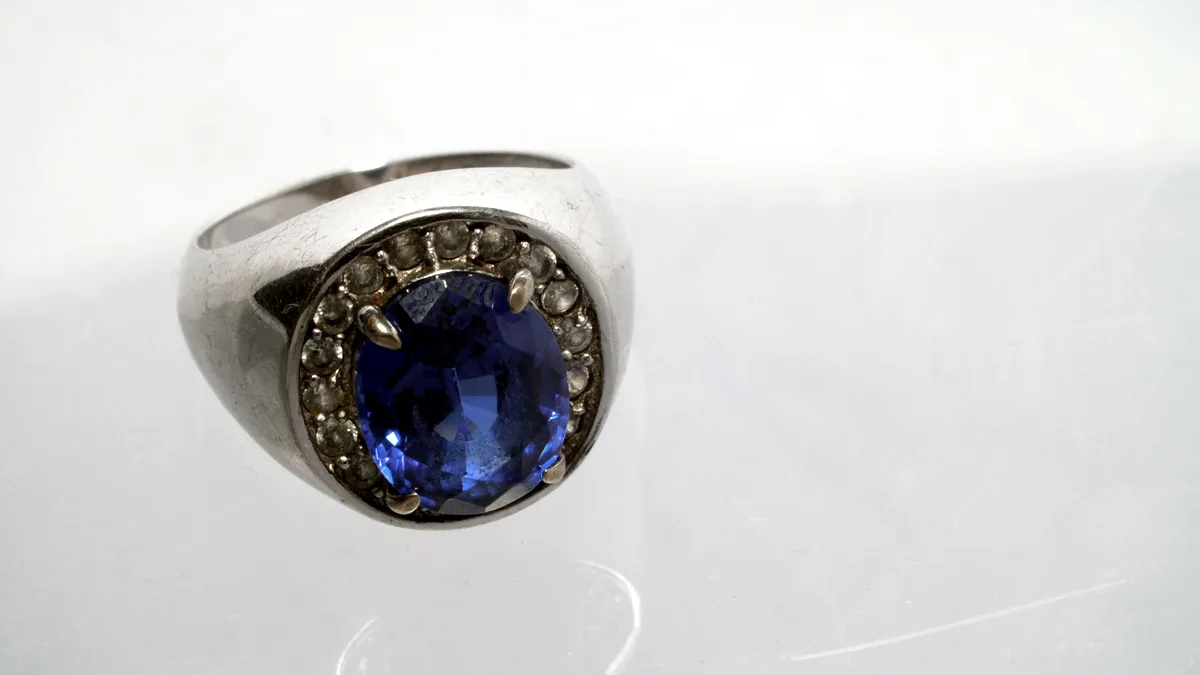
What makes a gemstone 925 ring different from a plain band
What makes a gemstone 925 ring different from a plain band is the stone, the setting and the price. A plain 925 sterling silver ring is one continuous band of metal, while a gemstone version adds a centre stone, a setting such as a prong, bezel or channel, and a small metal basket that holds the stone above the finger. The metal content stays the same 92.5% silver, so the difference is carried by the gemstone and the hardware around it. Buyers who search for 925 sterling silver rings are usually looking for that combination: a coloured stone on a stamped 925 band, at a price below gold.
Stones, settings and the 925 stamp
Three things define the piece. The stone decides the colour, the setting decides how the stone is held, and the 925 stamp decides the metal. A prong setting wraps 4 to 6 metal claws around the stone for a taller look, a bezel setting wraps a rim of metal around the edge for a lower, more secure seat, and a channel setting seats the stone in a groove so it sits flush. Each gemstone has a Mohs hardness from 1 to 10, and the hardness tells you how the ring will wear: a diamond at 10 scratches almost nothing, a sapphire at 9 takes daily wear easily, and an opal at 5.5 needs a protective bezel if it is worn every day.
How to choose a gemstone for your band
To choose a gemstone for your band, work from colour first, then hardness, then budget, in that order. The colour is what the wearer sees, so match it to the skin tone and the wardrobe before anything else. The hardness tells you how much daily wear the stone can take without a scratch, and the budget tells you how large a stone that hardness allows. A turquoise at a 5 on the Mohs scale is soft, porous and best worn a few times a week, while a sapphire at 9 is hard enough for a ring that never comes off. The table below lines up the four stones this page covers against the numbers that decide the choice.
| Gemstone | Typical colour | Mohs hardness | Best setting | Indicative price per ring |
|---|---|---|---|---|
| Turquoise | Sky blue to green | 5 | Bezel | 40 to 120 GBP |
| Opal | White body with fire | 5.5 | Bezel | 60 to 250 GBP |
| Sapphire | Blue, pink, yellow | 9 | Prong or bezel | 120 to 600 GBP |
| Emerald | Green | 7.5 | Bezel | 150 to 700 GBP |
Those ranges are typical for a single-stone 925 ring with a 0.5 to 1 carat centre stone, and a larger or multi-stone stone will push the price toward the top of each band and past it.
The 4 most popular gemstones in sterling silver rings
The 4 most popular gemstones in sterling silver rings are turquoise, opal, sapphire and emerald, and each leads with a different colour and a different wear profile. Turquoise is the soft, porous blue-green that suits a bezel setting and a lighter wearing habit, because its 5 hardness means it scratches and can dry out if kept wet for long periods. Opal carries the play of colour called fire, and it wants a protective bezel and a dry storage box, because a 5.5 hardness and a small amount of internal water make it the one to watch. Sapphire is the hard, daily-wear choice at 9 on the Mohs scale, and it comes in blue, pink and yellow, so it fits a coloured look without giving up durability. Emerald is the green anchor at 7.5, and it usually carries natural inclusions called jardin, so a clean, inclusion-free emerald costs more than one with a little life in it.
Birthstone rings: matching the gem to the month
Birthstone rings match the gemstone to the month of birth, and the modern list pairs 12 stones with the 12 months from January to December. A wearer who is born in April reaches for a sapphire or a diamond, in August for a peridot, in December for a turquoise or a zircon, and in October for an opal. The tradition goes back centuries, but the modern pairing is fixed by the jewellery trade, so a birthstone ring is really a 925 silver gemstone ring with a personal date attached. Because each month maps to a stone, a couple can build a set of 12 rings, one per month, all in 925 silver, and a birthday gift becomes a stone with a story rather than a generic band.
Care, cleaning and the risks with soft stones
Care, cleaning and the risks with soft stones come down to one rule: treat the stone, not just the silver. Clean the 925 band with warm water, a drop of mild soap and a soft cloth, then dry it flat, because the metal tolerates routine cleaning well. A turquoise or an opal needs more care: avoid soaking them, avoid ultrasonic cleaners, and store them in a soft pouch away from harder jewellery, because a 5 to 5.5 stone will scratch against a sapphire or a diamond in the same box. Keep a gemstone ring off when swimming in chlorinated water, when handling household chemicals, and when lifting heavy items, and let a jeweller re-tighten a prong setting once a year if the ring is worn daily. A bezel-set turquoise that is cleaned gently and dried promptly will outlast the same stone set in an open prong, for the simple reason that the bezel hides the stone's edge from a knock.
Wholesale 925 silver gemstone jewellery for retailers
Wholesale 925 silver gemstone jewellery for retailers is sold in 12 to 14 carat boxes per style, at a landed cost that is usually 30 to 50% of the retail price. A retailer buys a box of turquoise rings at a wholesale price, retails each ring at 2 to 3 times that price, and covers the margin with the labour of a setting, a stone and a 925 stamp that the customer cannot see but trusts. The minimum order is often 1 box per style, and a mixed order across 3 or more styles is common, so a small shop can stock a turquoise, an opal and a sapphire line without committing to deep depth in any one. Because the 925 content is standard, a buyer can compare styles on stone and setting alone, and a wholesale 925 silver gemstone range gives a retailer a coloured line that competes with gold at a fraction of the metal cost.
The same 925 standard also carries through the rest of the ring family: a man looking for a heavier, darker piece will look at Men's 925 silver rings, a couple choosing a proposal ring will look at 925 silver engagement rings, and a wearer who wants the gemstone look on the foot will look at Silver Toe Rings in 925 Sterling Silver. Each of those keeps the same 92.5% silver base, the same 925 stamp, and the same stone logic: the colour is the point, the hardness sets the care, and the band simply holds the two together.