Why silver rings tarnish
Yes, 925 sterling silver jewellery tarnishes, and it is the copper in the alloy, not the silver, that drives the reaction. Every genuine ring, band or setting darkens when sulfur in air, sweat or the environment bonds with the 7.5% copper in the alloy. The 925 stamp marks 92.5% silver and 7.5% other metals, usually copper, and that copper share is exactly what makes a real sterling piece react to sulfur over time. Tarnish forms as a thin sulfide film, usually 1 to 5 micrometres thick, that sits on the surface and turns bright silver a dull yellow, brown or black. You can lift it off with polish, and you can slow it down with dry storage, so tarnish is a manageable surface reaction rather than a flaw. The sections below follow a 925 ring from cause to prevention, naming what drives the film, how to read it, and what stops it.
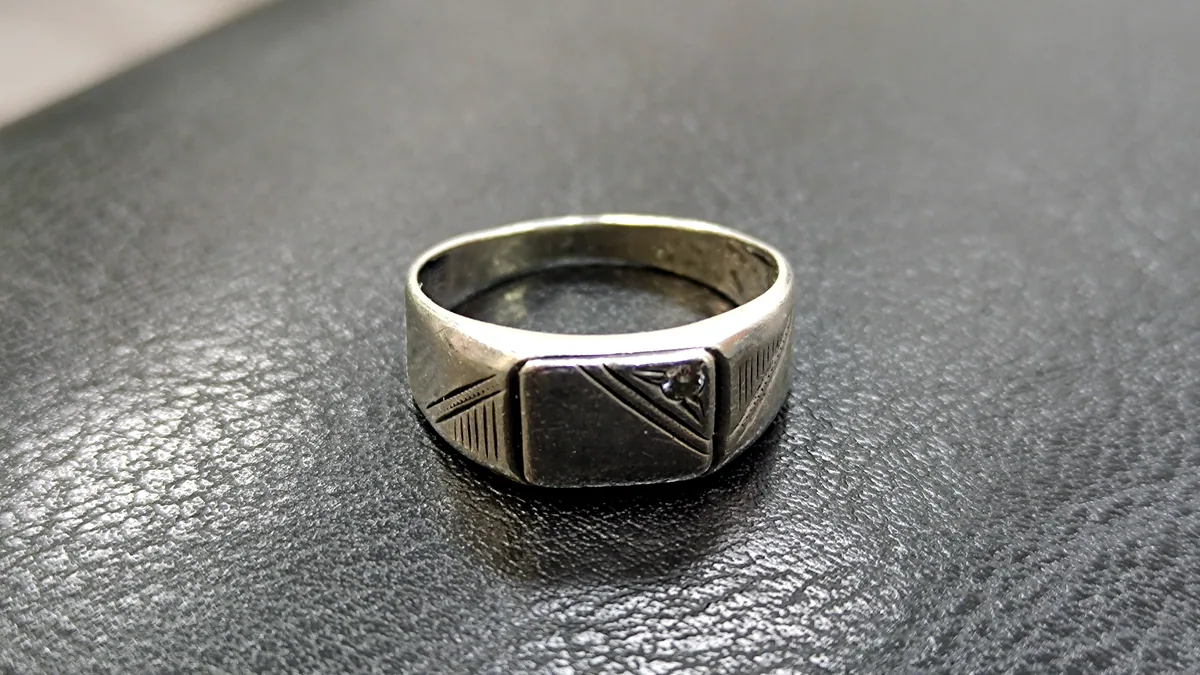
Searchers most often ask whether sterling silver rings do they tarnish, and the honest answer is yes, all genuine 925 sterling silver rings tarnish at some point. The debate usually turns on three comparisons: how fast a ring darkens, which 925 silver rings you can polish back to shine, and what the cheap silver rings that do not tarnish claim is doing differently. The first two are easy to settle; the third hides a trade-off worth understanding before you buy. In the sections that follow we name the cause, separate real sterling from plated fakes, and then walk through the 3 cleaning methods and 2 storage habits that keep a ring bright for years.
Why sterling silver rings tarnish
To see why sterling silver rings tarnish, start with the alloy itself. Pure silver, the 999 fine grade, tarnishes slowly and evenly because it is soft and keeps a clean surface. Sterling adds 7.5% copper by weight to gain strength, and copper is far more reactive to sulfur than silver is. Sulfur arrives in four everyday carriers: hydrogen sulfide in humid air, thiols in the proteins of your skin, sulfur compounds in the rubber of a ring box or a watch strap, and the sulfates that build up in the water used for hand-washing. Each carrier leaves sulfur atoms that bond to the surface within hours of contact. The film then grows by a few nanometres per day in a damp room and by more in a hot bathroom, which is why a ring worn daily darkens faster than one that sits in a drawer. The whole reaction is surface chemistry: nothing below the first layer of metal is consumed, so the ring loses no value, only its shine.
Does real sterling silver tarnish
Does real sterling silver tarnish? Yes, it does. A genuine 925 ring tarnishes, and that fact is one of the cheapest ways to spot a fake. A piece stamped 925 should darken over weeks if worn, or over months if stored, because the copper alloy is present and reactive to hydrogen sulfide. A ring that stays bright for years while it is worn is usually one of three things: a high-silver piece such as a 999 band, a silver-plated ring over a base metal, or a fake stamped with no alloy at all. To test at home, rub the band with a bar of soap and warm water and look under a magnifier for a dull seam where plating has worn, or weigh it: a 925 band of a given width feels noticeably heavier than a plated one of the same size, because silver is 10.49 grams per cubic centimetre against 7.87 for steel and 8.96 for brass. The stamp is the first check, the weight is the second, and the tarnish pattern is the third, and all three should agree before you call a ring real. The same weight and stamp logic applies to a 925 silver engagement ring you are considering as a gift, since the buyer will want the same certainty that the piece is the metal the hallmark promises.
How fast a ring tarnishes
How fast a ring tarnishes depends on four variables you can control: moisture, sulfur exposure, how often you wear it, and what you store it beside. A 925 band worn on a damp hand in a city room with sulfur in the air develops a visible film in 2 to 4 weeks, while the same ring stored dry in a sealed pouch in a cool room may stay bright for 6 to 12 months. Humidity is the multiplier, because sulfur compounds dissolve into the moisture on the metal and reach the copper faster than dry gas does. Heat adds to the rate, which is why a ring left in a car glove box darkens within a few days in summer. Wearing it actually helps in one way, since the friction of the hand polishes the high points of the band and keeps them reflective, even as the low points and the setting gather film first. The table below sorts the common situations from slowest to fastest tarnish so you can see where your own ring falls.
| Storage or wear condition | Typical time to visible tarnish | What drives the rate |
|---|---|---|
| Dry, sealed anti-tarnish pouch at 15 C | 6 to 12 months | Low sulfur, low humidity, sealed from air |
| Open ring box in a cool room at 20 C | 4 to 8 weeks | Room sulfur and ambient humidity |
| Worn daily, wiped after washing | 2 to 4 weeks on the setting | Skin thiols and sweat, friction on the band |
| Worn daily in a damp or humid climate | 1 to 3 weeks across the band | Moisture dissolving sulfur, higher skin moisture |
| Left in a car glove box or a hot bathroom | 2 to 5 days | Heat accelerating the reaction, trapped sulfur |
The pattern across the table is the same one you will meet in any 925 silver engagement ring you own: the drier and the more sealed the storage, the longer the shine lasts, and the more humid and warm the environment, the faster the film builds. That single rule covers most of the prevention that follows, and it applies equally to a Silver Toe Rings in 925 Sterling Silver piece that sits in the same drawer as the bands.
Cheap rings that do not tarnish, and what they are
The cheap silver rings that do not tarnish are almost never real sterling, and understanding the four common fakes removes the guesswork from shopping. The first is silver-plated base metal, a thin layer of silver over brass or steel, which stays bright until the plating wears at the edges and then rusts or greens at the seam. The second is silver-coloured stainless steel, which is 316 or 304 stainless with a bright finish and no silver at all, so it never tarnishes because it has no silver to tarnish, but it is also not the metal the stamp promises. The third is a low-silver alloy stamped with a fake 925, which may darken but with an uneven, patchy film rather than the even tone of true sterling. The fourth is an oxidised design, a ring that is intentionally blackened in the recesses so it looks tarnished on purpose and is then sealed with lacquer to hold that look. To protect yourself, buy from a seller who states the 925 assay and the weight, and be suspicious of a ring that is both very cheap and very bright for a long time, since real 925 does neither. If a ring is advertised as sterling but never dulls, ask for the hallmark certificate before you pay, and check the price against a current silver spot price of roughly 0.6 to 0.8 US dollars per gram of metal, so you can tell a fair deal from a mislabelled one.
How to clean a tarnished ring
To clean a tarnished ring, work from the gentlest method to the strongest and stop as soon as the shine returns. The first method is a soft microfibre jewellery cloth impregnated with a polishing compound, which lifts light film from a 925 sterling silver ring in 30 seconds of rubbing and leaves no residue. The second is a paste of baking soda and water, about 1 teaspoon of soda to 2 teaspoons of water, rubbed gently for 10 to 20 seconds, which handles a medium film and is safe on plain bands but can dull a ring that has gemstones set in it. The third is an aluminium foil and baking soda bath: line a bowl with foil, add the ring, 1 tablespoon of baking soda and a small amount of boiling water, and the tarnish transfers to the foil in 2 to 5 minutes because the silver sulfide is reduced back to silver. For a ring with prongs, a channel setting or any stone, skip the bath and use only the cloth, since the electrochemical reaction in the bath can loosen a weak prong. Finish every clean by rinsing in clean water and drying with a lint-free cloth, and polish the band before the setting so you do not rub film into the crevices. A plain band cleaned this way returns to a near-original shine in under 10 minutes total.
How to store rings to stop tarnish
To store rings so they stop tarnishing, control the two things that drive the reaction, sulfur and moisture. Store each ring separately in a sealed anti-tarnish bag, the kind that contains a sulfur-absorbing strip, because bags that touch each other share the same air and the strip works faster when the volume it treats is small. Keep the bags in a cool, dry drawer, ideally below 20 C, rather than in a bathroom cabinet where humidity sits above 60% for hours a day. Remove the ring before hand-washing, before swimming in a chlorinated pool, and before using rubber gloves or latex, since each of those introduces sulfur compounds straight onto the metal. Wipe a worn band with a dry cloth once a week to lift the thin film before it thickens, and polish it with the cloth every 1 to 2 months as a routine rather than waiting for heavy tarnish. A ring stored this way stays bright for the 6 to 12 month window in the table above, and the same routine keeps any 925 silver engagement ring and any everyday band in the same box looking equally bright. The habit matters more than any single product: sealed, dry, cool and separate storage is the whole system, and it costs less than one cleaning kit while it prevents the need for most of them.
Will a silver ring ever lose its shine for good
Will a silver ring ever lose its shine for good? No, not from tarnish. A 925 silver engagement ring, a 925 sterling silver ring, or any plain 925 band can always be polished back to brightness, because tarnish is a surface film and the silver beneath is untouched. The only ways a ring permanently loses its shine are wear, where the metal is physically worn down over many years, or damage, where a ring is scratched, bent or chemically etched by a harsh product such as an unmarked dip solution. Avoid the dips and the abrasive pastes on stoned pieces, clean gently as the steps above describe, and store dry and sealed, and the ring keeps its polish for the life of the wearer. The Men's 925 silver rings on a dresser and the women's bands in a travel case follow the same rule: tarnish is reversible, the alloy is stable, and the copper that causes the film also gives the ring the strength to survive a lifetime of cleaning. Keep the routine short, keep the storage dry, and the shine stays.